


Mining operations rarely take place where the terrain is easy. Whether a crew is working in remote northern environments, navigating soft ground, crossing wetlands, or accessing areas far from established roads, transportation can become one of the biggest logistical challenges on a job site. Conventional trucks, ATVs, and other off-road vehicles can be highly capable, but there are situations where even specialized equipment struggles to reach the location where it is needed.
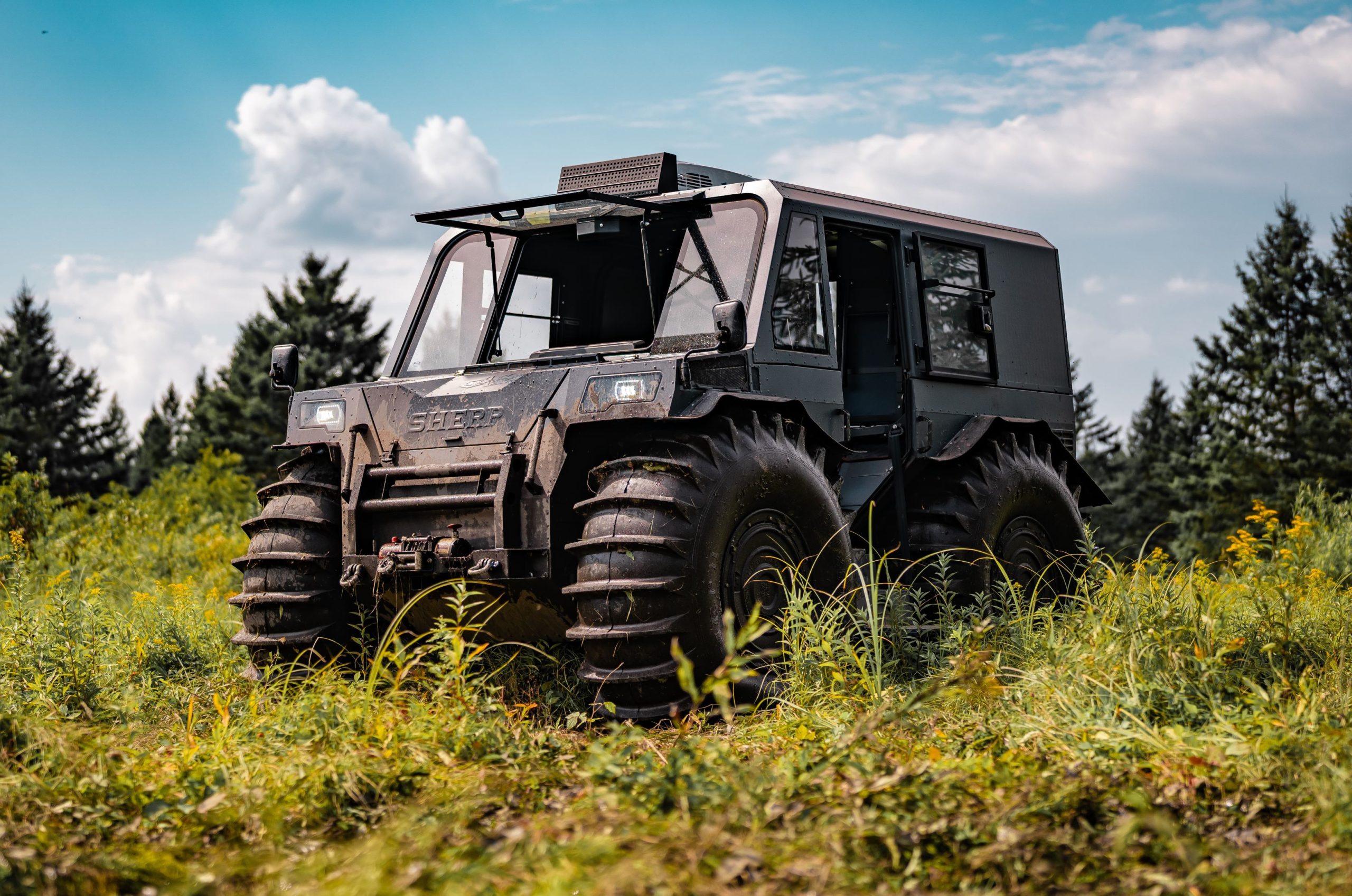
That is where amphibious all-terrain vehicles can provide a different approach to remote site access. Designed to travel across challenging terrain while also floating on water, vehicles such as the SHERP N 1200 give mining crews another option when conventional transportation methods become limited by ground conditions.
Why Access Is a Challenge in Mining
Mining operations often require equipment, personnel, tools, and supplies to reach areas that are difficult to access by traditional roads. A site may include steep terrain, loose gravel, sand, peat, marshes, rocks, snow, ice, or areas where roads simply aren’t practical to build. Seasonal conditions can make the situation even more difficult. A route that is accessible during dry conditions may become soft and unstable after heavy rain or during seasonal thaw.
The problem isn’t always getting a vehicle to the general area. The challenge is getting it all the way to the specific location where the work needs to happen. Building additional access roads can be expensive, time-consuming, and environmentally disruptive. Using a conventional vehicle that becomes stuck can create another problem for the crew. Recovery equipment may need to be brought in, delaying the work and adding another logistical requirement. An amphibious vehicle approaches the problem differently by being designed around mobility in difficult terrain from the beginning.
What Makes an Amphibious Vehicle Different?
An amphibious vehicle is designed to travel across land and water rather than being limited to conventional road surfaces. The SHERP N 1200, for example, is designed for terrain including grass, gravel, sand, peat, marsh, dunes, rocks, snow, and ice. It can also travel across ponds, lakes, rivers, shores, and other water environments. That versatility can be particularly useful for mining operations because difficult terrain isn’t always confined to one type of obstacle.
A crew might encounter soft ground followed by a water crossing, then rocky terrain or a steep approach. Instead of requiring a different transportation solution for each obstacle, an amphibious all-terrain vehicle is designed to handle a combination of conditions. The SHERP N 1200 can travel at speeds of up to 25 mph on land and approximately 3.7 mph on water. It is also designed to climb grades up to 35 degrees and overcome obstacles up to approximately 1 meter in height.
Low Ground Pressure Matters
One of the biggest considerations when operating off-road is not simply how much horsepower a vehicle has. It is how much pressure the vehicle places on the ground. A heavy vehicle with conventional tires can quickly lose mobility when traveling across soft or unstable surfaces. As the tires sink into the terrain, resistance increases and the vehicle can eventually become immobilized.
The SHERP N 1200 is designed with extremely low ground pressure, ranging from approximately 0.9 to 2.1 pounds per square inch depending on conditions and configuration. Its oversized, extra-low-pressure tires distribute the vehicle’s weight across a large contact area. That allows the SHERP to travel across surfaces where a conventional vehicle may struggle to maintain traction or avoid sinking. For mining operations, that can be especially relevant when crews need to reach areas where creating a conventional road isn’t practical.
Carrying People, Equipment, and Supplies
Remote access isn’t useful if a vehicle can’t carry what the crew needs. The SHERP N 1200 has a listed payload capacity of 1,200 kg, or approximately 2,640 pounds, and can accommodate up to nine people including the driver. It also has a listed towing capacity of 2,350 kg, or approximately 5,181 pounds. That gives operators flexibility in how they use the vehicle.
Depending on the operation, the vehicle could potentially be used to transport personnel, tools, supplies, equipment, or other cargo into areas that are difficult to reach with conventional vehicles. The goal isn’t necessarily to replace every vehicle on a mining site. Instead, an amphibious vehicle can fill a specific transportation gap: reaching locations where access is the primary challenge.
Remote Exploration and Site Support
Mining doesn’t only involve active extraction. Exploration, surveying, environmental monitoring, maintenance, and infrastructure work can all require personnel to reach remote areas. In those situations, transportation needs may be different from those of heavy production equipment. A crew may not need a massive machine. It may need a compact, highly mobile vehicle capable of carrying people and supplies through terrain that would otherwise require significant preparation.
This is where the mobility of an amphibious all-terrain vehicle becomes particularly useful. Rather than waiting for conditions to improve or constructing additional access routes, crews have the option of using equipment specifically designed for difficult terrain.
Built for Remote Environments
Mining operations can also take place in environments where weather and temperature create additional challenges. The SHERP N 1200 is designed for operation across a wide temperature range, with published operating temperatures extending from approximately -40°C to +45°C. Its diesel engine, low-pressure tires, and protected vehicle systems are designed around operation in demanding environments.
That matters when equipment isn’t operating in a controlled environment. A remote-access vehicle needs to be dependable not only when the ground is dry and conditions are ideal, but also when weather, terrain, and distance from support facilities make a job more difficult.
Is an Amphibious Vehicle Right for Your Mining Operation?
An amphibious vehicle isn’t a replacement for every piece of equipment used in mining. Heavy trucks, loaders, excavators, and other specialized machines still have their roles. The value of an amphibious all-terrain vehicle is its ability to solve a different problem: access.
If your operation regularly encounters soft ground, wetlands, water crossings, snow, rocky terrain, or remote locations without established roads, an amphibious vehicle may provide a transportation solution that conventional off-road equipment can’t. The SHERP N 1200 is built specifically around that concept. With ultra-low ground pressure, amphibious capability, substantial payload capacity, and the ability to operate across a wide variety of terrain, it gives mining crews another way to move people and equipment when conventional access becomes a limitation.
For mining companies working in remote or difficult environments, the right transportation solution isn’t always the vehicle with the most horsepower. Sometimes, it’s the vehicle that can actually get there.


