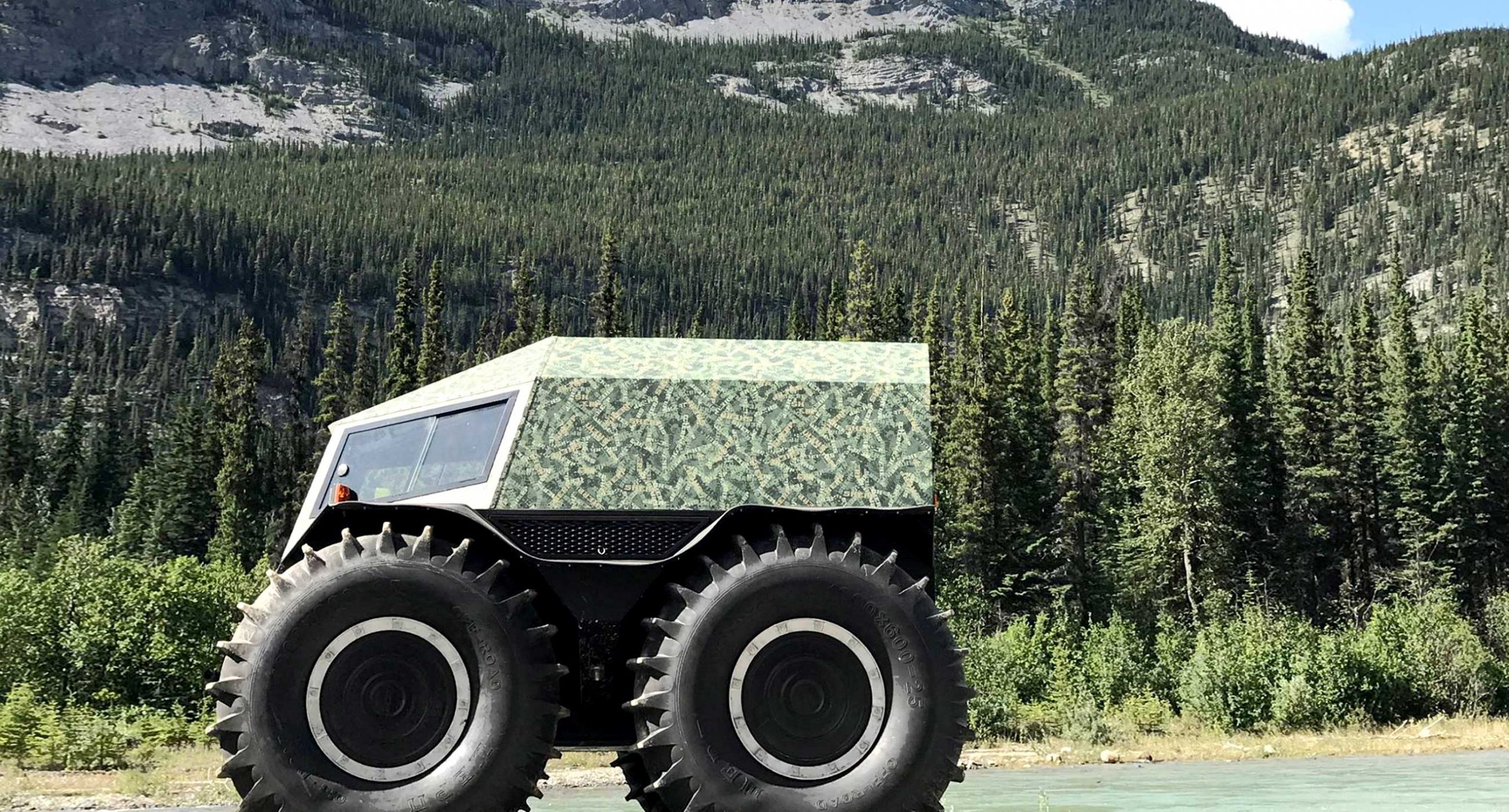


When people first see a SHERP, the reaction is usually the same: “That thing is crazy.” The oversized tires, amphibious design, and ability to climb over obstacles immediately get people’s attention. But after the first impression wears off, the next question is usually much more practical:
What is a SHERP actually used for?
That’s a fair question because a SHERP isn’t designed to replace your pickup truck, side-by-side, or skid steer. It’s a specialized machine built for situations where traditional vehicles simply stop working.
The common theme among nearly every SHERP owner is this: they have places they need to reach where conventional vehicles either can’t go or can’t go reliably. Whether that’s because of mud, snow, water, muskeg, flooded roads, or the complete absence of roads, SHERP fills a very specific role. Let’s look at the kinds of jobs SHERP was actually designed for and why organizations across multiple industries continue to invest in these vehicles.
The Common Problem Every SHERP Owner Faces
Although SHERP owners work in very different industries, most of them deal with the same challenge. They need to get people, equipment, or supplies into locations that don’t have dependable access.
Sometimes there is a road, but only during certain seasons. Sometimes there’s a trail that’s usable until heavy rain arrives. Other times there isn’t any road at all. Instead of asking, “Can this vehicle drive fast?” SHERP owners are asking a different question:
“Can this vehicle get us there today?”
That’s a very different buying decision. When reaching the jobsite is the biggest obstacle, reliability matters far more than speed.
Search and Rescue Operations
Search and rescue organizations often operate when conditions are at their worst. Flooding, severe storms, deep snow, hurricanes, and remote wilderness emergencies don’t happen when roads are dry and conditions are perfect. Rescue teams may need to cross flooded fields, frozen lakes, swamps, river crossings, or heavily wooded terrain while transporting personnel and equipment.
In many of these situations, conventional rescue vehicles simply cannot reach the scene. Because SHERP can travel through water, snow, mud, and soft terrain without requiring different equipment for each environment, it gives rescue teams another option when access becomes difficult. Several organizations also outfit SHERPs with stretchers, emergency medical equipment, lighting, and communications gear to support rescue operations.
Wildfire Response
Wildfire response isn’t limited to fighting active fires. Crews spend months building firebreaks, monitoring conditions, transporting equipment, conducting prescribed burns, and accessing remote staging areas. Many of these locations are well beyond maintained roads.
After fires, crews often need to inspect burned areas, repair infrastructure, and assess environmental damage. SHERP allows personnel to reach these areas without depending entirely on trucks or tracked equipment. Its ability to cross burned landscapes, soft ground, creek crossings, and rough terrain makes it useful throughout multiple stages of wildfire management.
Utility and Powerline Maintenance
Electric utilities maintain thousands of miles of transmission lines and substations, many of which are located in remote terrain. Routine inspections continue regardless of weather. Storm damage often requires immediate repairs.
Crews may encounter flooded right-of-ways, muddy access roads, wetlands, snow-covered corridors, or steep terrain. Waiting for conditions to improve isn’t always practical when customers are without power. SHERP allows utility crews to reach damaged infrastructure while transporting tools, replacement parts, and personnel into areas where traditional service trucks may struggle.
Cell Tower and Communications Infrastructure
Cell towers are rarely built where access is convenient. They’re placed where coverage is needed. That often means mountaintops, forests, wetlands, tundra, or isolated rural areas.
Technicians responsible for maintaining these sites frequently deal with muddy roads, snow, flood conditions, and changing terrain throughout the year. SHERP provides a way to reach communication infrastructure more consistently, helping reduce delays during scheduled maintenance and emergency repairs.
Pipeline and Oil & Gas Operations
Pipeline operators and energy companies often maintain infrastructure stretching hundreds of miles through remote environments. Inspection crews, maintenance personnel, and emergency response teams regularly travel through terrain that changes dramatically throughout the year. One section may consist of gravel roads. The next may be wetlands. The next could involve creek crossings or muskeg.
SHERP allows crews to continue moving across changing terrain without constantly switching vehicles or waiting for better conditions. For companies operating in northern climates, that flexibility can be especially valuable during spring breakup and fall freeze-up.
Mining and Geological Exploration
Exploration projects usually begin long before permanent roads exist. Geologists, survey crews, and exploration teams often spend weeks working in undeveloped areas while transporting equipment, fuel, and supplies. Traditional trucks frequently reach the end of the road long before the work begins.
Helicopters remain an option, but they’re expensive for routine transportation. SHERP gives exploration crews another way to reach remote sites while carrying personnel and equipment across difficult terrain. As projects move toward development, SHERP can also support construction crews and environmental monitoring teams working throughout the property.
Forestry Operations
Modern forestry involves much more than harvesting timber. Crews perform forest health assessments, invasive species management, reforestation, wildlife monitoring, and road inspections throughout the year. Many forestry operations occur in soft ground where logging roads become muddy or impassable after heavy rain. Remote work areas may require crossing streams, wetlands, or snow-covered terrain. SHERP helps crews maintain access even when seasonal conditions make conventional vehicles unreliable.
Wildlife Management and Conservation
Biologists and conservation professionals spend much of their time working far away from paved roads. They conduct wildlife surveys, install monitoring equipment, restore habitat, monitor wetlands, and perform environmental assessments. Many of these projects occur in environmentally sensitive areas where heavy vehicles can cause significant ground disturbance.
SHERP’s low ground pressure allows crews to access soft terrain while reducing rutting compared to many conventional vehicles. Whether monitoring waterfowl nesting habitat or conducting fisheries research, reliable transportation allows field crews to spend more time working and less time dealing with access problems.
Disaster Relief and Emergency Response
Natural disasters rarely leave roads in good condition. Flooding, hurricanes, tornadoes, ice storms, and severe weather can quickly isolate communities. Emergency response organizations often need to deliver supplies, transport personnel, assess damage, or evacuate residents under extremely difficult conditions.
SHERP’s ability to travel through flooded areas, debris, snow, and unstable terrain makes it well suited for these situations. Because it also floats, crews don’t necessarily need separate boats when floodwaters interrupt road access.
Municipal Public Works
Municipalities are responsible for maintaining infrastructure in every season. That includes drainage systems, parks, culverts, remote utilities, flood control structures, and public land.
Some cities and counties also manage large natural areas where trucks cannot easily operate. A SHERP can assist public works departments with inspections, maintenance activities, emergency response, and seasonal projects in locations where traditional fleet vehicles struggle.
Wetland Restoration
Wetlands are among the most productive ecosystems on Earth, but they can also be among the hardest places to access. Restoration crews often need to transport equipment, plants, fencing materials, pumps, and monitoring equipment into marshes and saturated ground.
Getting stuck isn’t just inconvenient, it delays projects and increases costs. SHERP provides reliable access while minimizing many of the mobility challenges associated with working in wetlands.
Remote Construction Projects
Construction doesn’t always happen in cities. Infrastructure projects frequently begin in undeveloped locations where roads have yet to be built. Bridge construction, transmission line installation, pipeline work, environmental remediation, and remote facilities all require crews to reach difficult terrain before heavy equipment arrives.
SHERP helps transport personnel, tools, supplies, and inspection teams throughout the early phases of these projects. Its ability to cross multiple terrain types without requiring road improvements can save both time and labor.
Scientific Research
Researchers working in remote environments often face transportation challenges before their projects even begin. Universities, environmental agencies, and research organizations conduct studies involving climate, hydrology, wildlife, vegetation, soils, and water quality.
Research sites are often intentionally located in undisturbed areas. SHERP provides access to these locations while carrying personnel and scientific equipment into areas where conventional vehicles cannot reliably travel.
Remote Property Access
Not every SHERP owner represents a government agency or industrial company. Some private landowners own large properties that become difficult to access throughout the year.
Cabins, hunting camps, fishing properties, and remote recreational land may involve flooded trails, snow-covered access routes, or wetlands. Rather than maintaining multiple seasonal vehicles, some owners use SHERP to access their property year-round.
Industrial Inspection Work
Many industrial facilities include infrastructure spread across large areas. Water treatment systems, dams, levees, pipelines, remote pump stations, and environmental monitoring sites often require regular inspections.
When weather deteriorates or ground conditions become unstable, inspectors still need safe access. SHERP helps maintenance and inspection teams continue working despite changing terrain conditions.
Recovery Operations
Recovering stuck trucks, ATVs, UTVs, or equipment is another application where SHERP has proven useful. Recovery work often occurs in the same difficult terrain that caused the original vehicle to become stuck.
Deep mud, muskeg, snow, flooded trails, and remote backcountry locations can make recovery difficult for traditional tow vehicles. SHERP’s traction, flotation, and off-road capability allow recovery crews to reach disabled vehicles that would otherwise require more complicated extraction methods.
What SHERP Is Not Designed For
It’s also important to understand what SHERP isn’t. It isn’t designed to replace highway vehicles. It isn’t intended for high-speed trail riding. It isn’t a recreational ATV.
If most of your driving happens on gravel roads, farm lanes, or maintained trails, there are probably less expensive vehicles that will meet your needs. SHERP becomes valuable when terrain consistently prevents other vehicles from doing their jobs. That’s where it earns its place.
The Right Tool for the Right Job
Every piece of equipment has a purpose. A skid steer isn’t built for highway driving. A pickup truck isn’t built for crossing wetlands. A boat isn’t built for climbing riverbanks. SHERP fills a gap that many organizations didn’t have a good solution for before. Instead of asking one vehicle to work outside its intended purpose, SHERP is designed specifically for environments where conventional transportation reaches its limits.
So, what jobs is a SHERP actually built for? The answer is simple: jobs that require reliable access to difficult terrain.
Whether that’s supporting search and rescue teams, maintaining powerlines, inspecting pipelines, restoring wetlands, conducting wildlife research, recovering stuck equipment, or reaching remote communication sites, the common challenge is always the same, getting to places where traditional vehicles struggle.
For organizations that work in these environments every day, transportation isn’t just about moving from one point to another. It’s about being able to reach the job consistently, safely, and without spending valuable time recovering stuck vehicles or waiting for better conditions. That’s where SHERP fits. It isn’t meant to replace every vehicle in a fleet. It’s built for the jobs that most other vehicles simply weren’t designed to handle.