

Reliable communication infrastructure is something most people take for granted. Cell towers, radio systems, microwave relay stations, and other communication assets quietly keep businesses, emergency services, utilities, and communities connected every day. However, many of these sites are located in places that are anything but convenient. Remote communication sites are often built on mountaintops, deep in forests, across wetlands, on tundra, or in areas with little to no road access. Getting technicians, tools, fuel, and replacement parts to these locations can be one of the biggest operational challenges communication companies face.
When weather changes, roads deteriorate, or seasonal conditions make traditional access impossible, maintenance crews still need to reach these sites. Outages can’t wait for ideal conditions. Preventive maintenance schedules still need to be completed. Emergency repairs often need to happen immediately. This is where SHERP vehicles have become valuable tools for organizations responsible for maintaining communications infrastructure in remote environments.
The Growing Need for Reliable Remote Site Access
As communication networks continue expanding, infrastructure is being installed farther from established roads and population centers. Rural broadband initiatives, expanding cellular coverage, utility communication systems, emergency radio networks, and private industrial communication systems all require infrastructure in difficult-to-access locations. In northern regions, many communication sites were originally built assuming winter roads or frozen ground would provide seasonal access. Today, changing weather patterns and shorter freeze seasons are making that assumption less reliable.
Even in areas with existing access roads, conditions can change quickly. Heavy rain can wash out roads. Spring thaw can turn gravel roads into mud. Flooding can make crossings impassable. Snow accumulation can block access for weeks. For companies responsible for maintaining network uptime, waiting for better conditions often isn’t an option.
Why Traditional Service Vehicles Often Fall Short
Most communication service fleets rely heavily on pickup trucks, utility vehicles, tracked equipment, and occasionally helicopters. Each option works well in certain situations, but all have limitations. Pickup trucks are excellent on maintained roads and established access routes. Unfortunately, many remote tower sites are located well beyond the end of those roads. Once terrain becomes saturated, muddy, snow-covered, or flooded, even four-wheel-drive trucks can struggle.
UTVs and ATVs extend access beyond where trucks can go, but they also have limits. Deep mud, wetlands, muskeg, standing water, and unstable ground can quickly stop conventional off-road vehicles. Recovery operations in remote areas add time, cost, and safety risks. Tracked machines can improve mobility in snow and soft ground, but they are often expensive to transport and may still struggle when terrain transitions between land and water.
Helicopters provide rapid access but come with significant operational costs. Weather limitations, scheduling challenges, and high hourly expenses make them impractical for many routine maintenance tasks. For communication providers looking for a more consistent and cost-effective solution, these limitations create operational headaches.
Communication Sites Are Rarely Located in Ideal Terrain
Communication infrastructure is often placed where signal coverage is most effective, not where access is easiest. Cell towers serving rural communities may sit in wetlands or heavily forested areas. Emergency communication systems are frequently installed on remote ridges or mountaintops. Utility communication equipment may follow transmission corridors that cross swamps, rivers, and undeveloped land.
Oil and gas operations often rely on communication sites positioned deep within remote lease areas. Mining operations may have relay stations located miles from established infrastructure.
As a result, technicians regularly encounter terrain that includes:
- Soft ground and wetlands
- Flooded access roads
- Deep mud
- Snow and drifting conditions
- Tundra and muskeg
- Creeks, ponds, and water crossings
- Fallen timber and storm debris
- Steep or uneven terrain
A vehicle that performs well on gravel roads may not be capable of handling these conditions consistently.
How SHERP Solves Remote Access Problems
SHERP vehicles approach off-road mobility differently than traditional service vehicles.
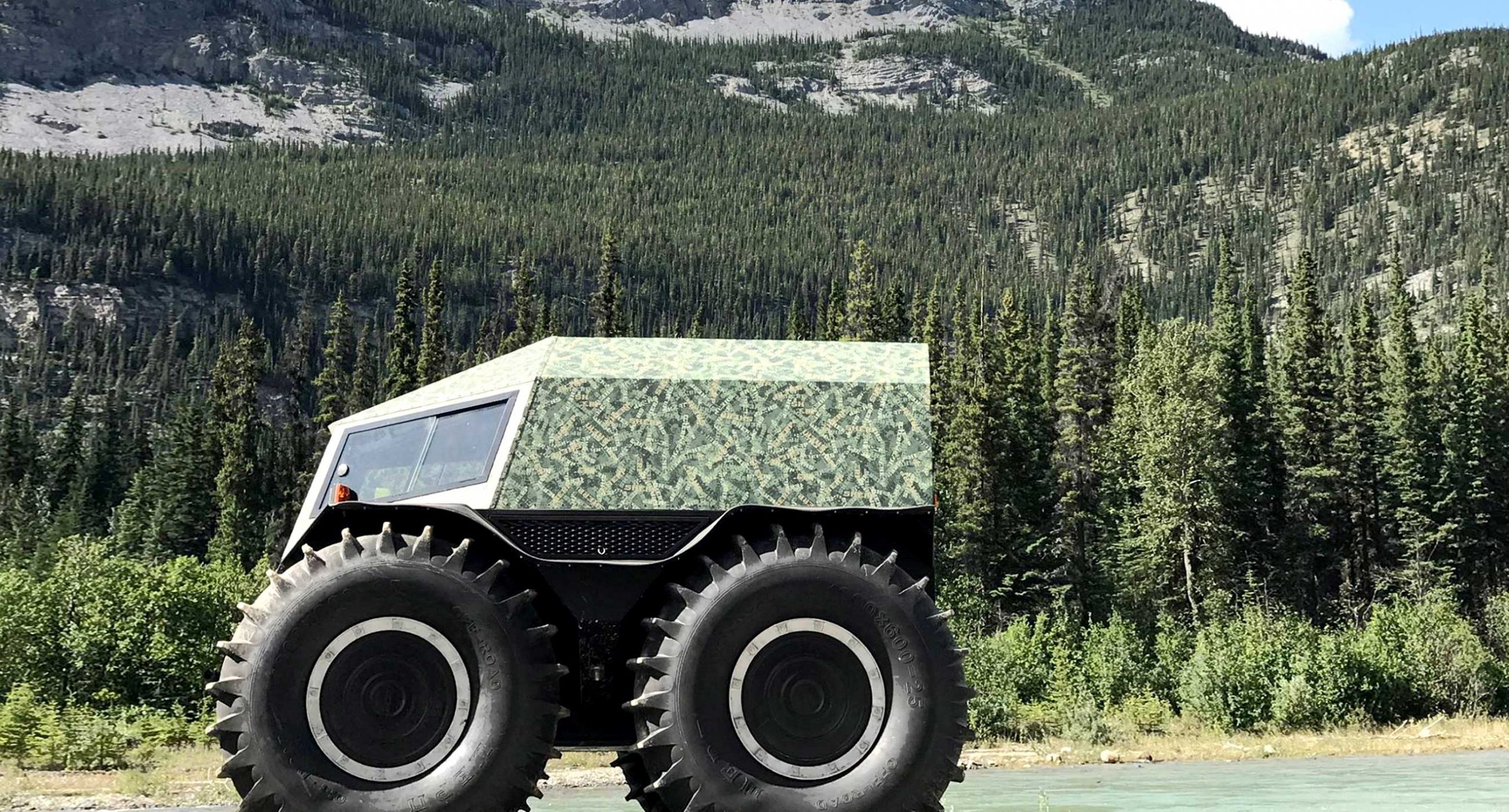
Instead of relying on high horsepower, aggressive suspension systems, or speed, SHERP focuses on flotation, traction, and low ground pressure. This design allows crews to continue moving through terrain that would typically stop conventional vehicles.
The oversized low-pressure tires distribute weight across a large surface area, helping the vehicle stay on top of soft ground rather than sinking into it. This becomes particularly important in wetlands, muskeg, thawing ground, and muddy access routes. Because SHERP is designed to travel across land and water without stopping, flooded roads, ponds, marshes, and shallow waterways become far less of an obstacle. For communication companies, this means fewer delays, fewer recoveries, and more predictable access to remote infrastructure.
Maintaining Service During Severe Weather Events
Communication systems become especially important during severe weather events.
Unfortunately, these are often the exact conditions that make site access most difficult.
Flooding, hurricanes, severe storms, wildfires, and winter weather can damage communication infrastructure while simultaneously making roads impassable. Emergency repair crews may need to reach damaged sites immediately to restore service for first responders, utilities, hospitals, and affected communities.
Traditional vehicles may struggle to reach these locations during or immediately after major weather events. SHERP vehicles can provide an additional layer of capability during emergency response operations. Their ability to move through flooded areas, deep snow, debris-covered terrain, and unstable ground allows repair crews to access sites sooner. Reducing restoration time can be critical when communication networks support emergency services.
Access During Spring Thaw and Freeze-Up
In northern climates, spring breakup and fall freeze-up create some of the most challenging access conditions of the year. Frozen roads begin thawing. Surface water accumulates. Ground loses stability. Snow remains in shaded areas while other sections become muddy and saturated. These transition seasons can leave conventional vehicles stranded or force organizations to delay maintenance activities.
Many communication companies operating in Alaska, Canada, and northern U.S. regions are familiar with these seasonal challenges. SHERP’s low ground pressure and ability to travel across soft terrain help maintain access during periods when traditional vehicles may need to remain parked. This capability allows maintenance schedules to continue even when seasonal conditions deteriorate.
Reducing Downtime and Network Interruptions
Every hour a communication site remains offline has consequences. Cellular outages impact customers. Utility communication failures can affect operations. Public safety communication disruptions can create significant risks. The longer it takes to reach a site, diagnose the problem, and complete repairs, the longer those impacts continue.
Reliable access helps reduce downtime. By allowing technicians to reach remote locations more consistently, SHERP vehicles can help organizations respond faster to outages and complete repairs sooner. For companies measured on network reliability and uptime, improved access directly supports operational goals.
Transporting Personnel, Tools, and Equipment
Remote communication maintenance rarely involves sending a single technician with a toolbox.
Crews often need to transport test equipment, replacement components, batteries, fuel, generators, climbing gear, and other supplies. Depending on the work being performed, multiple personnel may also need to travel together.
SHERP vehicles offer significant cargo and passenger capacity while maintaining mobility across difficult terrain. This allows organizations to transport both people and equipment in a single trip, reducing the need for multiple vehicles or repeated runs. When sites are located hours from the nearest maintenance facility, maximizing each trip becomes important.
Improving Worker Safety in Remote Environments
Worker safety is always a priority during remote field operations.
Technicians traveling long distances through difficult terrain face risks that go beyond the maintenance work itself. Getting stuck in isolated areas can expose personnel to severe weather, extreme temperatures, and communication limitations. Recovery operations may require additional staff and equipment, increasing overall exposure.
SHERP helps reduce some of these risks by improving mobility and reducing the likelihood of becoming stranded. The enclosed cab also provides protection from weather conditions that crews may encounter during long trips to remote sites. While no vehicle eliminates all operational risks, reducing access-related challenges can improve overall field safety.
Supporting Private Communication Networks
Not every communication site serves public cellular networks. Many industries operate private communication systems to support critical operations. Utility companies maintain communication infrastructure for grid management. Pipeline operators use remote communication assets for monitoring and control systems. Mining operations depend on communication networks to coordinate activities across large properties.
Forestry operations, railroads, and government agencies also maintain remote communication infrastructure. These organizations often operate in challenging environments where reliable access directly affects productivity and safety. SHERP can provide a practical transportation solution for maintaining these critical systems.
Lowering Long-Term Access Costs
When evaluating access solutions, organizations often focus only on vehicle purchase price. However, the total cost of maintaining remote communication infrastructure includes much more than equipment acquisition. Recovery expenses, delayed repairs, helicopter usage, seasonal access limitations, road maintenance, and overtime all contribute to overall operating costs. Repeatedly recovering stuck vehicles or waiting for conditions to improve can become expensive over time.
Organizations that regularly operate in difficult terrain often find that improving access reliability reduces many of these indirect costs. For companies responsible for large networks of remote communication sites, those savings can add up over years of operation.
Real-World Examples of Remote Communication Challenges
Consider a rural cellular provider with towers located across wetlands and forested terrain. Heavy spring rains wash out access roads, preventing trucks from reaching several sites. Service interruptions last longer because crews cannot access equipment quickly. Or consider a utility company maintaining communication infrastructure along transmission corridors crossing muskeg and flood-prone areas. Seasonal access restrictions delay inspections and increase maintenance backlogs.
In northern regions, communication systems supporting remote communities may rely on infrastructure located far from established road systems. During freeze-up and breakup seasons, access windows become unpredictable. These are exactly the types of situations where specialized off-road vehicles provide operational advantages.
The Future of Remote Infrastructure Maintenance
Communication infrastructure will continue expanding into remote areas. Demand for broadband access, emergency communications, industrial connectivity, and utility communication systems continues to grow. At the same time, environmental conditions and access challenges are becoming more unpredictable. Organizations responsible for maintaining these networks need equipment capable of adapting to those realities.
Vehicles designed specifically for difficult terrain can help ensure that communication systems remain accessible regardless of season or ground conditions. Maintaining remote cell towers and communication sites presents unique challenges. Difficult terrain, changing weather, seasonal access issues, and emergency response requirements all complicate maintenance operations.
Standard trucks and off-road vehicles work well in many situations, but they often reach their limits when terrain becomes soft, flooded, snow-covered, or unstable. SHERP offers a different approach. Its low ground pressure, oversized tires, and ability to move through water and soft terrain make it well-suited for remote infrastructure access. For communication companies, utilities, government agencies, and industrial operators responsible for remote sites, reliable access can directly affect uptime, maintenance efficiency, and worker safety. When reaching the site is the biggest challenge, having the right vehicle can make all the difference.