



Wildlife management and conservation work rarely happens in places with paved roads and easy access. Biologists, conservation officers, researchers, land managers, and restoration crews often work in some of the most difficult terrain imaginable. Wetlands, muskeg, forests, river systems, tundra, floodplains, and remote backcountry areas are common workplaces for these professionals. Getting people and equipment into these areas is often one of the biggest challenges of the job. Traditional trucks can only go so far. ATVs and UTVs help extend access, but they still struggle in deep wetlands, flooded terrain, snow, and soft ground. Helicopters can provide access in certain situations, but they are expensive and not always practical for routine fieldwork.
This is where SHERP vehicles can provide a significant advantage. Designed specifically for extreme terrain, SHERP allows wildlife and conservation professionals to reach remote areas more reliably while minimizing many of the access problems associated with conventional vehicles. In this article, we’ll look at how SHERP supports wildlife management and conservation projects, why terrain access matters so much in these industries, and how specialized vehicles can improve both efficiency and field operations.
Why Access Matters in Wildlife Management
Wildlife management depends on field data. Decisions regarding habitat improvements, population management, species protection, and ecosystem restoration all rely on information collected directly on the landscape. Unfortunately, many of the habitats that support wildlife are difficult to reach. Waterfowl nesting areas are often located in marshes and wetlands. Moose, caribou, and other large mammals may inhabit remote forests, tundra, or bog systems. Fisheries work frequently occurs along isolated shorelines and river corridors. Endangered species monitoring often requires crews to travel far from established roads.
When field crews cannot safely or reliably access these areas, projects may be delayed, shortened, or canceled altogether. In many cases, the challenge isn’t performing the work itself. The challenge is simply getting there. Reliable access allows organizations to collect better data, complete projects on schedule, and respond quickly when management needs arise.
Working in Wetlands Without Constantly Getting Stuck
Wetlands play an important role in wildlife conservation. They provide habitat for migratory birds, amphibians, mammals, fish, and countless other species. As a result, wetland monitoring and management are major components of many conservation programs. Unfortunately, wetlands are also some of the hardest environments to access. Soft soils, standing water, floating vegetation, and unstable ground make travel difficult for conventional vehicles. Trucks and UTVs can quickly become stuck, especially during spring, after heavy rains, or in areas with saturated soils.
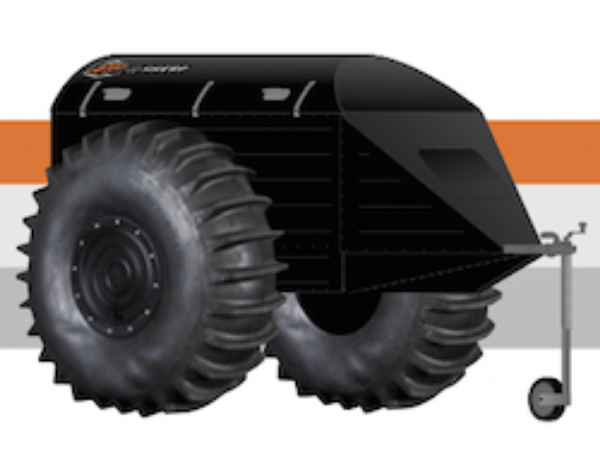
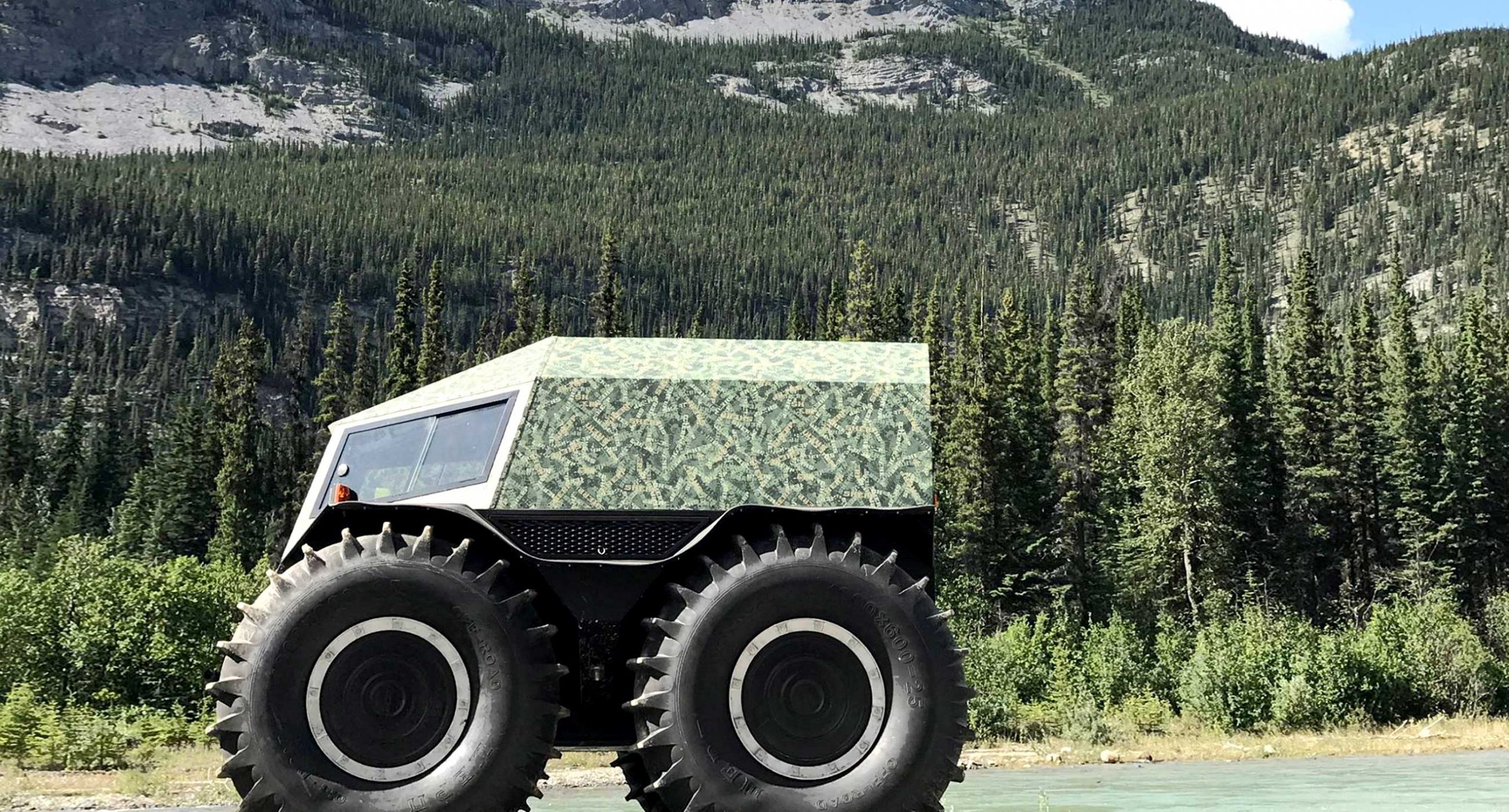
SHERP’s oversized low-pressure tires help distribute the vehicle’s weight across a much larger surface area. Rather than sinking deeply into soft ground, the vehicle remains closer to the surface and continues moving. Because SHERP is also amphibious, crews can transition between land and water without stopping or changing equipment. Marshes, flooded sections, shallow ponds, and water channels become much easier to navigate. For wetland restoration projects, habitat assessments, invasive species control, and wildlife surveys, this capability can dramatically improve access.
Supporting Wildlife Surveys and Population Monitoring
Wildlife agencies and conservation organizations routinely conduct surveys to estimate animal populations and monitor long-term trends. These surveys may involve aerial counts, ground observations, camera deployment, GPS collar work, or direct field sampling. In many cases, crews need to access remote habitats repeatedly throughout the year. Seasonal conditions can make this difficult.
Spring thaw can turn trails into mud. Fall rains may flood access roads. Winter snow can block traditional vehicles. Remote habitats often become inaccessible just when surveys need to occur. SHERP helps crews maintain access across a wide range of seasonal conditions.
Whether biologists are checking remote camera stations, monitoring nesting areas, or conducting wildlife inventories, the ability to reliably reach survey locations improves efficiency and reduces time spent dealing with access issues. For agencies operating across large landscapes, improved mobility can mean more data collected and fewer canceled field days.
Transporting Personnel and Equipment Into Remote Areas
Conservation work typically involves more than just transporting people. Field crews often carry sampling equipment, GPS units, telemetry gear, fuel, fencing materials, restoration supplies, chainsaws, hand tools, and camping equipment. Some projects require hauling substantial amounts of material into remote locations. For example, wetland restoration efforts may involve transporting pumps, seed mixes, fencing materials, or monitoring equipment. Fish habitat projects may require tools and construction supplies. Prescribed burn operations often involve water tanks, pumps, and firefighting gear.
SHERP’s passenger and cargo capacity allows organizations to move both personnel and equipment into remote areas in a single trip. Reducing the number of trips needed to complete a project saves time and improves overall operational efficiency.
Habitat Restoration Projects Often Happen in Difficult Terrain
Many habitat restoration projects focus specifically on areas that are challenging to access.
Wetland restoration, stream improvement, invasive species removal, shoreline stabilization, and forest management projects frequently occur far from roads. These projects may require repeated site visits over months or years. Without reliable access, restoration work becomes more expensive and more difficult to complete.
For example, crews removing invasive vegetation in wetlands may need to transport equipment into areas where conventional vehicles simply cannot operate. Land managers conducting prescribed burns may need to access remote firebreaks and staging areas under changing ground conditions. SHERP allows crews to reach these project sites consistently, helping organizations complete restoration activities more efficiently.
Assisting With Wildlife Capture and Research Operations
Wildlife research often requires hands-on fieldwork. Biologists may need to capture animals for health assessments, attach tracking collars, collect biological samples, or relocate animals as part of management programs. These operations frequently occur in remote environments where terrain conditions can change quickly. Large mammal research involving moose, bears, or caribou often takes place in wetlands, boreal forests, tundra, or snow-covered landscapes. Waterfowl research commonly occurs in marshes and flooded habitats.
Getting personnel and equipment into these areas safely is critical. SHERP provides a stable platform for accessing difficult terrain while transporting research crews and equipment. Because field operations often involve repeated travel to remote locations, reliable transportation becomes a major operational consideration.
Minimizing Disturbance in Sensitive Habitats
Conservation organizations are understandably concerned about minimizing environmental impacts during field operations. Heavy equipment can create ruts, compact soils, damage vegetation, and alter hydrology in sensitive areas. This concern is especially important in wetlands, peatlands, and other fragile ecosystems.
SHERP’s low ground pressure helps reduce surface disturbance compared to many conventional vehicles. By spreading vehicle weight across a larger footprint, the vehicle exerts less pressure on the ground. That does not eliminate environmental considerations or remove the need for careful route planning. However, it can help reduce the likelihood of severe rutting and soil disturbance in soft terrain. For projects occurring in environmentally sensitive areas, minimizing operational impacts is often an important objective.
Supporting Conservation Work Year-Round
Wildlife management is not limited to a single season. Spring may involve nesting surveys and habitat assessments. Summer often brings research projects and restoration work. Fall can include population monitoring and habitat management activities. Winter may involve tracking surveys, predator studies, or access to remote monitoring stations. Each season presents different access challenges.
Snow, mud, flooding, freeze-thaw conditions, and changing water levels can all affect field operations. Many traditional vehicles perform well under certain conditions but struggle under others. SHERP’s ability to operate in mud, snow, water, and soft ground provides organizations with greater flexibility throughout the year. Rather than relying on multiple specialized vehicles for different seasons, agencies may be able to maintain access with a single platform.
Supporting Conservation Law Enforcement
Conservation officers and wildlife enforcement personnel often patrol large, remote areas.
Illegal dumping, poaching investigations, trespassing complaints, and public safety incidents frequently occur in locations with limited road access. Officers may need to travel through wetlands, forests, river corridors, or snow-covered terrain while carrying equipment and responding to incidents quickly.
SHERP can provide law enforcement agencies with improved access to remote areas where conventional patrol vehicles cannot operate effectively. This capability can be particularly valuable in regions with extensive wetlands, seasonal flooding, or limited transportation infrastructure.
Applications in Northern and Arctic Environments
Many wildlife management agencies operate in northern climates where access challenges become even greater. Alaska, northern Canada, and other Arctic regions contain vast areas with little road infrastructure. Wildlife monitoring programs often require crews to travel across tundra, muskeg, frozen lakes, and remote waterways. Seasonal transitions can make travel especially difficult.
Spring breakup and fall freeze-up often create conditions where traditional wheeled vehicles, snow machines, and even boats become ineffective. SHERP was designed specifically for these kinds of environments. Its ability to travel across mixed terrain allows organizations operating in northern regions to maintain access during periods when other transportation options may be limited.
Reducing Operational Delays and Downtime
Field time is valuable. When crews spend hours recovering stuck vehicles, rerouting around flooded areas, or waiting for conditions to improve, project schedules suffer. Delays increase costs and reduce productivity.
Reliable transportation helps organizations maximize the time crews spend performing actual conservation work instead of dealing with access problems. For agencies operating under limited budgets and tight seasonal windows, improved efficiency can have a meaningful impact on project outcomes. Simply put, if crews can consistently reach the places they need to work, they can accomplish more.
Conservation Applications for SHERP
Wildlife management and conservation projects often take place in areas where terrain, weather, and seasonal conditions create significant access challenges. Wetlands, forests, tundra, floodplains, and remote backcountry areas are not easy places to work. Traditional trucks, ATVs, and UTVs can only go so far before conditions begin working against them.
SHERP provides a practical solution for organizations that need reliable access to difficult terrain. Its low ground pressure, amphibious capability, and ability to travel through mud, snow, water, and soft ground make it well suited for many conservation and wildlife management applications. For agencies, researchers, land managers, and conservation organizations, improved access means more time spent accomplishing field objectives and less time dealing with transportation problems.


