

Wetlands create a specific kind of access problem. The ground may look passable from a distance, but once a vehicle puts weight on it, everything changes. Soft soil, standing water, mud, vegetation, and hidden holes can make even a short route difficult. Trucks sink. ATVs dig ruts. UTVs lose traction. Heavy equipment often causes more damage than the work itself requires.
For crews that need to reach wetland areas for utility work, environmental monitoring, land management, rescue operations, construction access, or private property maintenance, the challenge is not just getting there. It is getting there without getting stuck, damaging the ground, or needing a second machine to recover the first one.
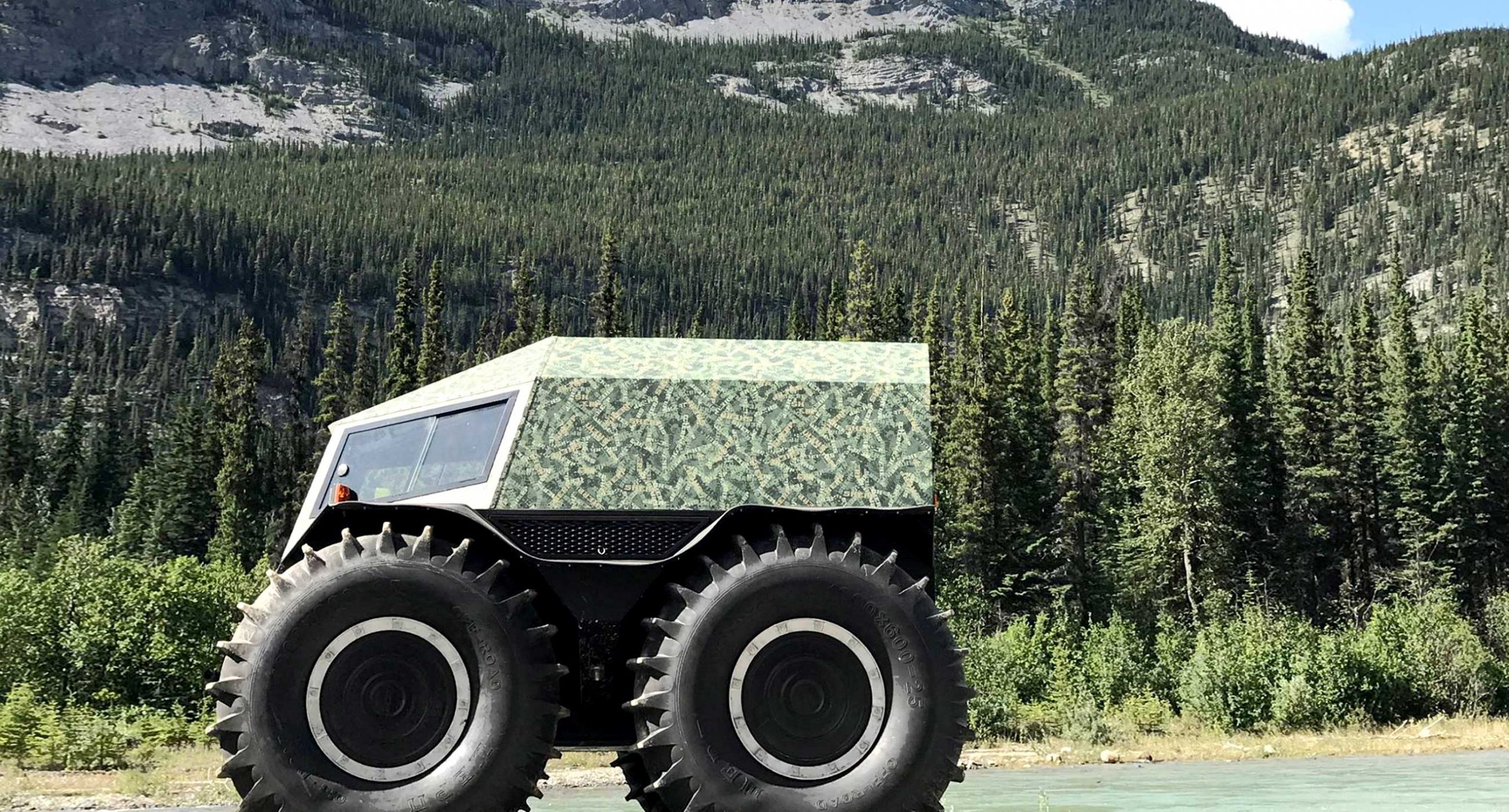
That is where SHERP fits into the conversation. SHERP vehicles are built for unstable terrain, and wetlands are one of the environments where their design makes a clear difference. Instead of relying on speed, high horsepower, or aggressive tires, SHERP uses low ground pressure, oversized tires, and a body designed to move through both soft ground and water. For wetland access, that combination matters more than most people realize.
Why Wetlands Are So Hard on Standard Off-Road Vehicles
Most standard off-road vehicles are built around the idea that there is some kind of firm base underneath the tires. Even when a vehicle is designed for mud or rough trails, it still needs traction from the surface below it. Wetlands do not always provide that. The ground can be saturated, layered with decaying vegetation, or made up of soft sediment that cannot support concentrated weight.
A pickup truck or standard UTV may perform well on a dirt road leading into a wetland area, but once the ground becomes soft, the vehicle’s weight starts working against it. The tires push down into the soil instead of staying on top. Once that happens, the vehicle needs more power to move forward, which usually leads to wheel spin. Wheel spin cuts deeper, the frame starts to drag, and recovery becomes the next problem.
ATVs can sometimes do better because they are lighter, but they still have limitations. Narrow tires can slice into wet ground, especially when the operator tries to power through. Even if the ATV makes it through, it may leave deep ruts behind. In regulated wetland areas, that ground disturbance can be a serious issue.
Tracked machines are another option, and they can be effective in certain conditions. However, they are often expensive to operate, slower to transport, and still capable of causing surface damage depending on the ground conditions. They also do not handle land-to-water transitions the same way an amphibious machine does. The main issue is that wetland access requires more than off-road traction. It requires flotation, low ground pressure, and the ability to keep moving through mixed terrain without stopping every time the surface changes.
Low Ground Pressure Is the Key to Wetland Travel
One of the biggest reasons SHERP works well in wetlands is low ground pressure. Ground pressure refers to how much weight a vehicle applies to the surface underneath it. The more weight concentrated in a small area, the more likely the vehicle is to sink.
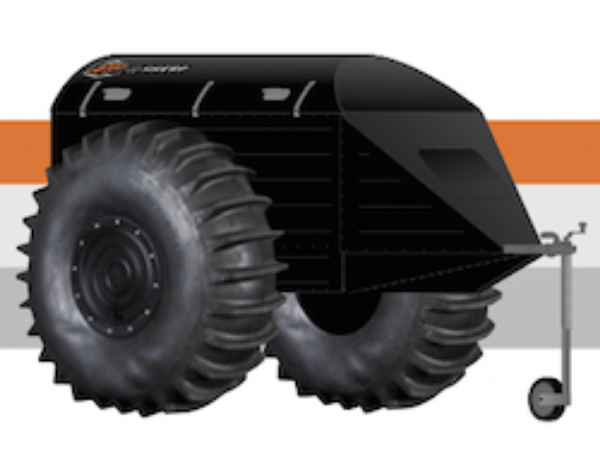
SHERP’s oversized tires spread the vehicle’s weight over a much larger surface area than traditional tires. Instead of pressing hard into soft ground, the tires distribute weight broadly and help the vehicle stay closer to the surface. This is similar to how snowshoes work. A person wearing boots may sink into deep snow, but with snowshoes, the weight spreads out and walking becomes much easier.
That same principle applies in wetlands. When a vehicle can stay on top of soft ground instead of breaking through it, everything changes. The vehicle uses less effort to move, causes less rutting, and reduces the chance of getting buried. This is one of the main differences between SHERP and many standard off-road vehicles. SHERP is not trying to overpower the wetland. It is designed to move across it more evenly.
Why Tire Size Matters More Than Horsepower
In soft ground, horsepower only helps if the tires can transfer that power into forward motion. Once the tires lose traction or sink below the surface, more power can make things worse. The vehicle digs deeper, mud builds up around the tires, and forward progress stops.
That is why tire size and air pressure matter so much. SHERP’s tires are large enough to create flotation and soft enough to conform to uneven surfaces. Instead of cutting into the ground, they roll over it and adapt to what is underneath.
This is especially important in wetlands because the surface is rarely consistent. One section may be grassy and firm. A few feet later, it may turn into mud. Then standing water. Then floating vegetation. A vehicle that relies on a narrow traction window will struggle because the ground is constantly changing.
SHERP’s tire design helps it move through those transitions without needing the operator to constantly change the route or use momentum to force the vehicle through. That makes the driving experience more controlled and reduces the risk of getting stuck.
Moving Through Standing Water and Saturated Ground
Wetlands are not just soft ground. They often include standing water, shallow channels, flooded trails, and areas where the line between land and water is not clear. For many vehicles, this creates a major problem.
A standard UTV may handle shallow water, but there is always a limit. Electrical components, air intakes, and driveline parts can be damaged if water gets too deep. Trucks face the same issue. Even if the vehicle does not stall, water crossings can lead to long-term maintenance problems.
SHERP is built to handle these transitions. When the ground turns into open water or a flooded section, the vehicle can continue moving instead of stopping or rerouting. The tires help provide flotation and movement, while the body is designed for this kind of environment.
For wetland work, that capability is practical. Crews do not have to spend time guessing whether a shallow pond or flooded crossing is too deep. They also do not need to bring a separate boat or create temporary access routes just to cross short sections of water.
Reducing the Risk of Getting Stuck
Getting stuck in a wetland is not a small inconvenience. Recovery can be difficult, expensive, and damaging to the site. In some cases, the recovery vehicle gets stuck too. Then what started as a simple access problem becomes a full equipment recovery operation.
SHERP helps reduce that risk by addressing the main causes of getting stuck in the first place. The low ground pressure helps prevent sinking. The large tires provide steady movement across soft surfaces. The vehicle can handle water instead of stopping at it. And because it does not need to rely on speed to clear obstacles, operators can move more carefully.
That last point is important. Many standard vehicles need momentum to get through mud or soft ground. Momentum can work, but it also increases risk. If the vehicle hits a hidden hole, log, rut, or deeper patch of mud, it can get buried quickly. SHERP is better suited for slow, steady movement, which gives the operator more control.
Wetland Access for Utility and Infrastructure Work
Utility companies often need to access power lines, pipelines, pump stations, communication towers, and other infrastructure located in or near wetlands. These sites are not always reachable by road, and access can change depending on season, rainfall, or water levels.
For this type of work, SHERP provides a practical way to move crews, tools, and equipment across difficult terrain. Instead of waiting for freeze-up or building temporary access roads, teams can reach the site more consistently.
This can reduce downtime for inspections and repairs. If a utility line goes down after a storm and the only route crosses saturated ground, a standard truck may not be useful. A SHERP gives crews another option when the conditions are poor but the work still needs to be done.
Wetland Access for Environmental Work
Wetland areas are often sensitive environments. Researchers, survey crews, conservation teams, and land managers may need to access these areas without causing unnecessary disturbance.
Heavy vehicles can leave deep ruts, damage vegetation, and alter water flow. Even smaller vehicles can create problems if they sink or spin tires. In some cases, one poorly planned access route can cause lasting damage.
SHERP’s low ground pressure helps reduce surface disturbance compared to vehicles that concentrate weight into smaller contact patches. That does not mean operators can ignore environmental rules or drive anywhere without impact, but it does mean the vehicle is better suited for sensitive terrain than many traditional options. For environmental monitoring, wildlife research, wetland restoration, and property assessments, this can be a major advantage.
Wetland Access for Landowners and Property Managers
Private landowners and property managers also deal with wetland access challenges. Whether the goal is checking remote acreage, maintaining hunting property, managing drainage, clearing debris, or reaching a cabin or worksite, soft ground can make regular access difficult. In many cases, landowners rely on ATVs or tractors until the conditions get too wet. Then they either wait for drier weather or risk getting stuck.
SHERP creates more flexibility. It allows access during wet periods, through standing water, and across areas where a tractor or side-by-side would be too risky. For larger properties with mixed terrain, that can make land management much easier.
Seasonal Wetland Challenges
Wetlands are rarely the same year-round. Spring thaw, heavy rain, snowmelt, and summer storms can all change access conditions quickly. A route that was usable last week may be too soft today. A dry crossing can become flooded overnight. This seasonal variation is one of the biggest reasons standard vehicles struggle. They may work well during one part of the year and become unreliable during another.
SHERP performs across a wider range of conditions. It can handle mud, water, snow, and soft ground without needing a completely different setup. That makes it useful for teams that need access year-round rather than only during ideal conditions.
Why SHERP Is Not Just for Extreme Situations
It is easy to think of SHERP only as a vehicle for dramatic rescue videos or extreme off-road demonstrations. But in wetland environments, the value is often much more practical. It helps crews get to work. It helps reduce recovery problems. It helps limit ground damage. It helps simplify access planning. It helps organizations avoid waiting for perfect conditions. That is the real use case. It is not about doing something flashy. It is about making difficult access more reliable.
Wetlands are challenging because the terrain does not behave like normal ground. It shifts, sinks, floods, and changes with the weather. Standard off-road vehicles often fail because they rely on traction from a surface that cannot support them.
SHERP takes a different approach. Its oversized low-pressure tires, low ground pressure, and ability to move through water make it well-suited for wetland access. Instead of digging into soft ground, it spreads weight out and keeps moving steadily.
For utility crews, environmental teams, landowners, emergency responders, and remote operators, that capability can save time, reduce recovery problems, and make wetland travel more predictable. If your work regularly involves soft ground, saturated soil, standing water, or mixed terrain, SHERP is worth considering as a practical access solution.