


Off-roading is one of those adventures that always brings an adrenaline rush; mud splashing, rocky climbs, the thrill of pushing a vehicle through tough terrain. But every seasoned off-road enthusiast knows one hard truth: eventually, you get stuck.
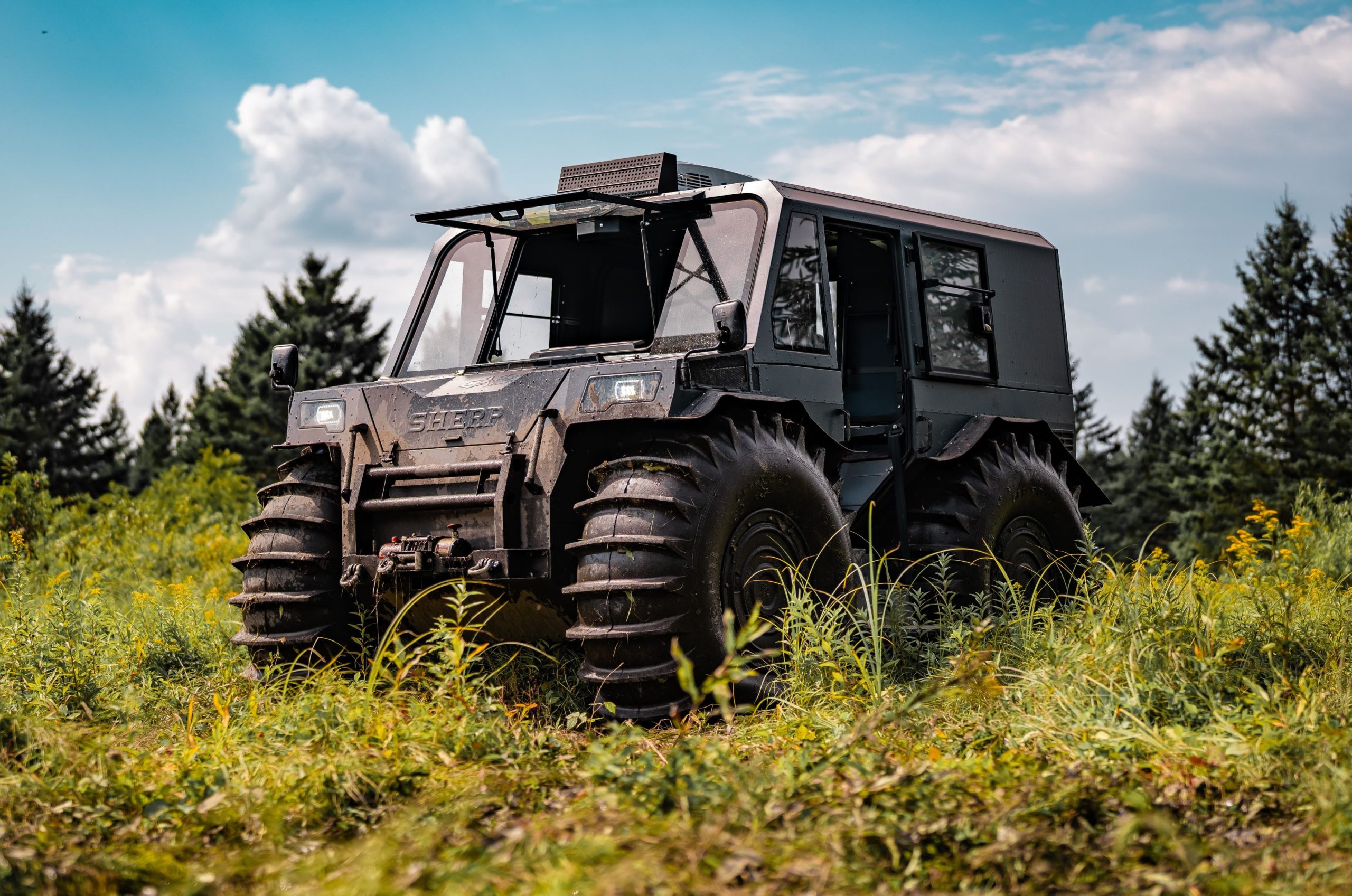
That’s where SHERP steps in. Built for the world’s most extreme conditions, SHERP is a superior off-road recovery solution. With unmatched traction, flotation, and pulling power, SHERP can go where other vehicles fail and bring stranded vehicles back to safety.
We’ll explore how SHERP recovers stuck ATVs, trucks, and other vehicles, why it outperforms traditional recovery equipment, and how it’s changing the game for off-roaders, emergency responders, and anyone who works in unforgiving terrain.
The Challenge of Off-Road Recovery
Recovering a stranded vehicle is rarely an easy task. A winch on an ATV or truck might help in some situations, but it relies on anchoring to a sturdy object like a tree or rock, something not always available in open mud flats, sand dunes, or frozen lakes. Traditional tow trucks? They’re not built for deep snow, swampy bogs, or remote backcountry trails.
Even with proper gear the process is grueling, slow, and sometimes dangerous. When vehicles are buried axle-deep in mud or snow, recovery can feel impossible without heavy machinery. But heavy machinery often can’t reach these remote or fragile areas without causing damage themselves.
This is where SHERP outperforms.
Why SHERP Is Built for Recovery
SHERP isn’t a modified ATV or a heavy tow rig, it’s an entirely different class of vehicle. Designed to overcome the toughest terrain, SHERP performs in the exact conditions where other vehicles get stuck.
Here are a few of the engineering features that make SHERP the ultimate off-road recovery vehicle:
- Large Low-Pressure Tires: Standing up to 71 inches tall and nearly 2 feet wide, SHERP’s signature tires create flotation across mud, snow, sand, and even open water. Low ground pressure means SHERP doesn’t sink where trucks and ATVs bog down.
- Amphibious Capabilities: If a truck or ATV is stuck on a frozen lake, swamp edge, or river crossing, SHERP can drive across the water to reach it, then haul it out. Few recovery vehicles can do the same.
- High Torque: SHERP’s compact diesel engine and skid-steer transmission deliver powerful, consistent pulling force at low speeds. That’s exactly what’s needed for winching and dragging stuck machines to solid ground.
- Central Tire Inflation System: SHERP uses exhaust gases to inflate and deflate its tires on the go, adapting traction instantly. That means when pulling a stuck truck out of a muddy rut, SHERP always has the traction it needs.
- Compact, Go-Anywhere Frame: Despite its size, SHERP can squeeze into dense forests, tight trails, and narrow gullies. It’s often the only vehicle capable of physically reaching the stranded ATV or truck.
The result is a vehicle purpose-built for off-road recovery where other vehicles can’t go.
Real-World Applications
So what does recovery with SHERP actually look like? Imagine a side-by-side buried in a mud pit on private land. A pickup truck tries to help, but sinks in too. Winches snap. Tow straps break. Everyone’s stuck.
When SHERP arrives, the story changes. Its oversized tires float over the mud instead of sinking. Using a tow strap or winch attachment, SHERP connects to the stranded vehicle, slowly pulls forward, and drags the ATV or truck free. Within minutes, the recovery is complete, with no ruts, no damage, and no wasted effort.
On frozen lakes, SHERP’s advantage becomes even more substantial. Where trucks risk breaking through thin ice, SHERP spreads its weight across wide tires, applying less pressure per square inch than a human footprint. It can roll right up to a stranded snowmobile or truck, secure it, and tow it back to solid shoreline.
In desert or dune environments, SHERP’s ultra-low ground pressure prevents it from bogging down like traditional recovery vehicles. That makes it invaluable for recovering off-road rigs trapped in soft sand.
SHERP vs. Traditional Recovery Equipment
Let’s put SHERP head-to-head against the most common recovery methods.
- Tow Trucks: Excellent for paved roads or mild dirt trails, but nearly useless in swamps, deep snow, or backcountry environments. SHERP fills the gap.
- Winches: Effective, but limited by line length and anchor points. SHERP can move freely to wherever the recovery is needed.
- Tractors or Heavy Machinery: Sometimes used for recovery, but they’re bulky, slow, and damaging to fragile environments. SHERP is lighter on the land and can go where tractors can’t.
- DIY Recovery Tools: Traction boards, shovels, straps; useful in a pinch, but exhausting, slow, and often insufficient. SHERP turns a multiple hour job into minutes.
The difference is clear: SHERP isn’t just another recovery option, it’s the recovery solution when everything else fails.
A Tool for Professionals and Adventurers
While SHERP is increasingly used by off-road enthusiasts to rescue ATVs and trucks, its impact stretches far beyond weekend adventures. Professionals rely on SHERP for recovery missions in the most critical situations:
- Search and Rescue Teams: Recovering stranded vehicles while simultaneously reaching and assisting people in distress.
- Emergency Services: Responding to trucks stuck during floods, snowstorms, or wildfires.
- Industrial Operations: Oil, gas, and mining crews use SHERP to retrieve stranded heavy-duty equipment in remote worksites.
- Guided Adventures & Outfitters: Tour operators use SHERP to ensure guests’ vehicles are always recoverable, no matter the terrain.
The versatility means SHERP is a safety net for any operation where getting stuck could put people, equipment, or entire projects at risk.
The Bigger Picture
For many off-road enthusiasts, the fear of getting stuck limits where they’re willing to explore. Knowing there’s a vehicle capable of recovering even the heaviest trucks in the worst terrain allows adventurers to push boundaries with confidence.
For professionals, SHERP means efficiency. Recovery jobs that once took hours, or required multiple vehicles and manpower, can now be completed quickly with one SHERP and a skilled operator. That’s time saved, money saved, and risks reduced.
SHERP Use For Off-Road Recovery
Recovering stranded ATVs and trucks is a challenge as old as off-roading itself. But with SHERP, the game has changed. Its amphibious abilities, low-pressure tires, and unmatched pulling power make it the single most effective tool for off-road recovery in mud, snow, ice, and water.
Including rescuing an ATV from a swamp, pulling a pickup off a frozen lake, or recovering stranded rigs during a storm, SHERP proves again and again that nothing stops it. For adventurers, it’s peace of mind. For professionals, it’s an essential tool. And for the world of off-road recovery, it’s the future.


