

Wildfires are becoming an increasingly severe threat worldwide, fueled by rising temperatures, prolonged droughts, and unpredictable weather patterns. When flames break out, response time is critical, and every minute can mean the difference. While traditional firefighting vehicles have played a crucial role for decades, the challenging terrain and unpredictable nature of wildfire zones demand new solutions. This is where the SHERP steps in as a game-changer for modern wildfire response.
Why Wildfire Response Needs More Than Traditional Vehicles
Wildfires rarely happen in places that are easy to reach. They often start in remote mountain ranges, dense forests, or hillsides where road access is limited or nonexistent. Traditional fire trucks, pickup trucks, and even ATVs can quickly become ineffective when facing down blocked access roads, steep inclines, loose soil, or debris-filled paths.
In many wildfire scenarios, responders must hike in on foot, carrying heavy gear through exhausting conditions, losing precious time while the fire spreads. Even helicopters, while effective for aerial water drops, face challenges such as visibility issues from smoke, limited payloads, and high operational costs.
Wildfire response teams need a vehicle that can handle it all like mud, rock, steep slopes, flooded areas, and even bodies of water. SHERP fills that role in ways no other off-road vehicle can.
The SHERP Advantage in Wildfire Environments
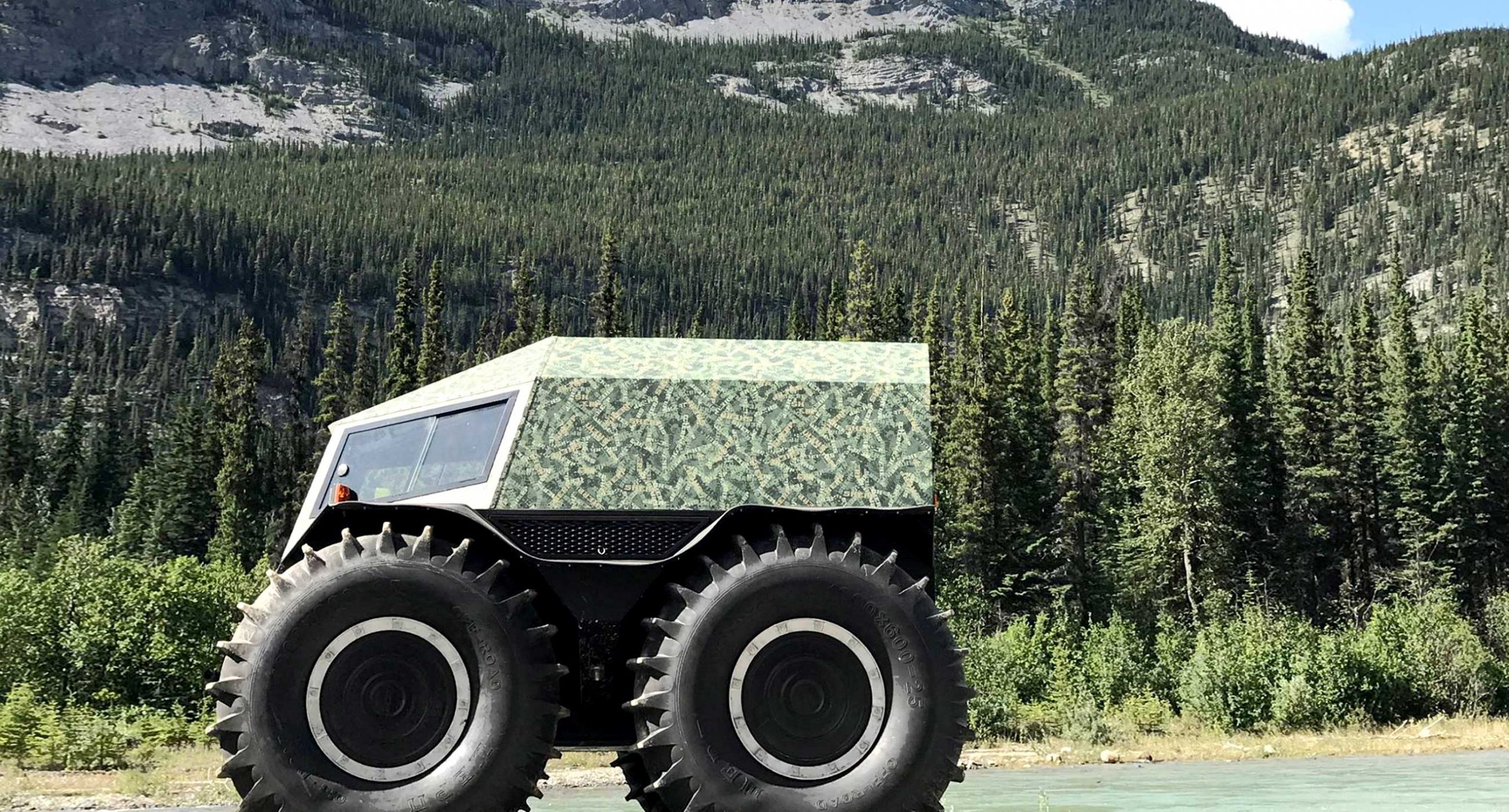
The SHERP is a purpose-built machine designed to tackle the world’s harshest landscapes. Its massive, low-pressure tires allow it to float over soft ground, crawl over large obstacles, and even travel across water. In wildfire response, this means it can reach isolated areas that other vehicles simply can’t.
A SHERP can overcome mudslides caused by firefighting water runoff, scale steep inclines to reach ridge lines, and float across lakes or reservoirs to get to the other side of a fire zone. This unique amphibious capability is critical in areas where wildfires break out near water bodies or in regions prone to sudden flooding after heavy firefighting operations.
Transporting Crews and Gear into the Fire Zone
When every second counts, moving firefighting personnel and gear quickly is a top priority. SHERP vehicles can carry a full crew along with essential supplies including hoses, pumps, chainsaws, and safety equipment, without being slowed by terrain conditions.
This mobility also extends to evacuation operations. SHERPs can be used to rescue stranded individuals from areas cut off by fire lines, transporting them back safely. Because SHERP cabins are fully enclosed and protected from debris, crews and evacuees can travel safely even in smoky, ash-filled environments.
Water Transport and Pump Deployment
One of the SHERP’s lesser-known advantages for wildfire response is its ability to transport water and deploy portable firefighting pumps. Many wildfire response teams use portable water tanks and pump systems in areas without hydrants. The SHERP can haul these directly to the fire, even across streams, swamps, or unstable ground where other vehicles would sink or stall.
In some cases, SHERPs can be positioned near water sources to act as a mobile refill point for smaller off-road firefighting units. This drastically cuts down the time crews spend traveling between the fire and water refill points, improving overall efficiency.
Supporting Aerial Firefighting
SHERP vehicles also play an important role in supporting helicopter and firefighting operations. In rugged areas where helicopters drop equipment or water bladders, SHERP units can quickly retrieve and reposition them as needed. They can also deliver fuel, food, and maintenance equipment to remote helipads or landing zones, keeping aerial operations running smoothly.
In this way, SHERP isn’t replacing aerial firefighting, it’s making it more effective by ensuring resources are always where they need to be, no matter how rough the terrain is.
Versatility in Post-Fire Recovery
Wildfire response doesn’t end when the last flames are put out. Recovery operations are just as important, and SHERP vehicles excel here too. After a fire, the land is often unstable, with ash-covered soil, weakened slopes, and damaged roads. SHERP’s low ground pressure minimizes further damage while still enabling crews to reach affected areas for inspection, soil stabilization, and reforestation work.
It can also help utility crews access downed power lines or damaged infrastructure, enabling faster restoration of essential services in affected communities.
Real-World Scenarios for SHERP in Wildfire Response
To better understand the SHERP’s capabilities, let’s look at some example scenarios:
Remote Ridge Access
Fire breaks out along a mountain ridge. Traditional trucks can only get within a mile of the flames. The SHERP carries a crew and their gear directly to the ridge line in minutes, allowing them to cut a firebreak before the blaze spreads downhill.
Flooded Lowlands After Firefighting
After days of aerial water drops, the valley floor is flooded. SHERP transports pumps and hoses across the flooded terrain to prevent the fire from reigniting.
Evacuation in Mixed Terrain
A small rural community is cut off by both fire lines and a nearby river. The SHERP crosses the river and brings families back to safety in a single trip.
Supporting Fire Camps
A forward operating base is set up in a rugged location. The SHERP keeps the camp supplied with food, water, and equipment while larger trucks are stuck miles away.
These scenarios highlight why emergency response organizations are increasingly adding SHERP vehicles to their fleets, they’re simply unmatched in versatility.
Cost-Effectiveness and Long-Term Value
While a SHERP may have a significant initial investment, the long-term value for wildfire agencies is large. Its durability, low maintenance requirements, and ability to replace multiple types of specialized vehicles mean it can pay for itself over time. More importantly, its role in saving lives, property, and natural resources makes it worth every penny.
When agencies factor in the reduced need for road building, helicopter hours, and multiple vehicle deployments, SHERP often becomes the most economical choice for rugged-terrain wildfire operations.
The Future of Wildfire Response
Wildfires are not going away, in fact, experts predict they will continue to grow in frequency and severity. As this reality sets in, agencies are looking for ways to stay ahead of the threat. SHERP’s amphibious, all-terrain capabilities make it a future-proof investment for firefighting teams around the world.
By combining SHERP with modern technology, drones, and aerial support, wildfire response strategies are becoming faster, safer, and more effective than ever before. The future of firefighting will rely on vehicles like SHERP that can adapt to any condition.
SHERP stands out as a vehicle that can go anywhere, carry anything, and do everything needed to support fire crews in the most extreme environments. For agencies seeking to modernize their wildfire response capabilities, look no further than SHERP.