


When your work takes you beyond established roads, having the right vehicle can make a significant difference in how efficiently you operate. Remote job sites, undeveloped terrain, and changing weather conditions can make it difficult to transport employees, tools, and supplies using conventional trucks or utility vehicles.
That’s why choosing an off-road utility vehicle requires more consideration than simply looking at horsepower or top speed. The vehicle needs to match the conditions you’ll encounter, the loads you’ll carry, and the distance you’ll need to travel.
Whether you’re working in mining, utilities, telecommunications, oil and gas, or another industry that requires access to remote locations, here are several important factors to consider when choosing an off-road utility vehicle.
1. Consider the Terrain You’ll Need to Navigate
Start by looking at where the vehicle will actually be used. Not all off-road vehicles are designed for the same conditions, and a machine that performs well on gravel roads or established trails may struggle in deep mud, wetlands, loose sand, or snow.
For remote work, it’s important to consider the full range of terrain your crew might encounter. Will you regularly cross soft ground? Are there water crossings along your routes? Do you operate in areas with steep inclines, fallen trees, rocks, or seasonal flooding? These questions help determine how much capability you’ll need.
For example, a conventional UTV may be sufficient for traveling between locations on established trails. However, operations involving marshes, peat, deep snow, or standing water may require a more specialized vehicle. The key is to choose equipment that can handle the most challenging conditions you’re reasonably likely to encounter, not just the easiest portions of your route.
2. Look at Ground Pressure and Tire Design
Tires have a major influence on how an off-road vehicle performs, particularly on soft or unstable surfaces. Ground pressure refers to how much pressure a vehicle applies to the ground beneath it. When that pressure is concentrated over a smaller contact area, the vehicle is more likely to sink into soft terrain. Once the tires begin digging into mud, sand, or peat, maintaining forward movement becomes much more difficult.
This is why tire size and design deserve close attention when comparing off-road utility vehicles. Larger tires with a wider contact area can help distribute the vehicle’s weight, reducing the pressure applied to the ground. Some specialized vehicles also allow operators to adjust tire pressure depending on the conditions.
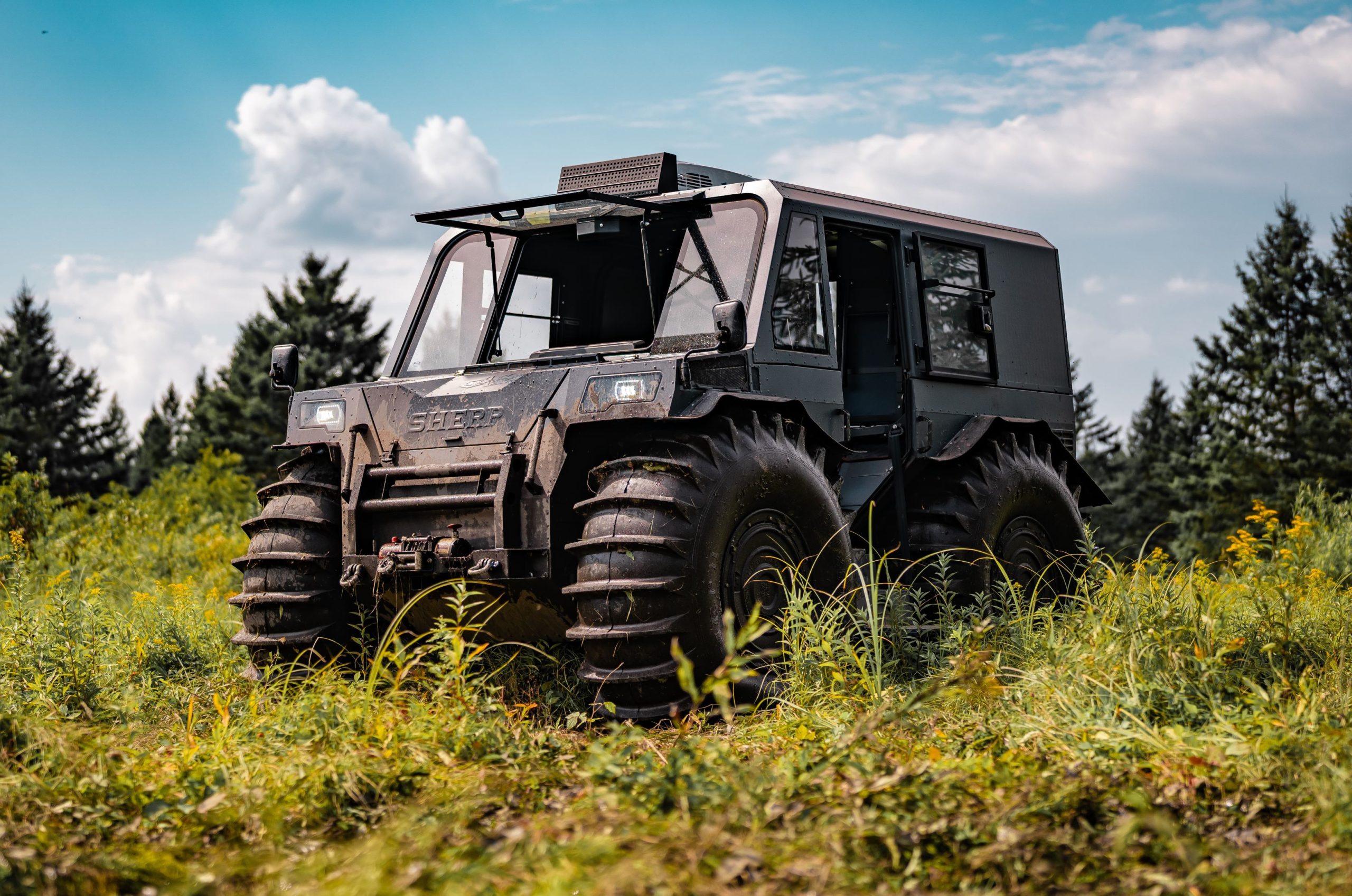
SHERP takes this approach with its oversized, ultra-low-pressure tires. The SHERP N 1200 has a published ground pressure range of approximately 0.9–2.1 PSI, helping it travel across challenging surfaces such as marshes, sand, peat, and snow. For crews working in areas where conventional vehicles tend to sink or lose traction, this type of design can make a meaningful difference.
3. Evaluate Payload and Passenger Capacity
An off-road utility vehicle needs to carry more than just its operator. Depending on the job, you may need to transport additional crew members, tools, replacement parts, safety equipment, or other supplies.
Before selecting a vehicle, consider how much weight you realistically need to move on a typical trip. Also think about whether you’ll need room for multiple passengers or primarily want a vehicle configured for cargo. Payload capacity is especially important because adding equipment and passengers can quickly increase the total weight being carried.
The SHERP N 1200, for example, has a maximum loading capacity of 1,200 kg (2,640 pounds) and can accommodate up to nine people, including the driver. Its configuration can also be adapted for passenger or cargo transportation depending on the operator’s needs. Looking at these specifications before purchasing helps ensure the vehicle can support your operation without consistently working beyond its intended capacity.
4. Consider Whether You Need Amphibious Capabilities
Water crossings can create some of the biggest transportation challenges for remote operations. A river, flooded trail, marsh, or other water obstacle can bring an otherwise capable off-road vehicle to a stop. Even when a crossing is relatively short, it may require crews to find another route or arrange separate transportation. If water is a regular part of your operating environment, an amphibious utility vehicle may be worth considering.
Unlike conventional off-road vehicles, amphibious vehicles are designed to travel across land and water. This gives operators another way to navigate environments where roads and trails are limited. The SHERP N 1200 is designed to travel across a variety of land surfaces while also floating on lakes, rivers, ponds, and other bodies of water. Its amphibious design can be particularly useful for crews working in remote areas where water crossings are part of the job. Not every operation needs this capability, but for those that do, it can eliminate the need to rely on multiple types of transportation for different environments.
5. Think About Range and Fuel Requirements
Getting to a remote location is only part of the challenge. Your vehicle also needs enough operating range to complete the work and return without constantly needing to refuel. Consider how far your crews typically travel, how long they spend away from their main facility, and whether fuel is readily available near the job site. Fuel capacity, consumption, and the ability to carry additional fuel can all influence how useful a vehicle will be in the field.
For operations that involve extended trips into remote areas, these details are especially important. Frequent refueling stops can interrupt work and create additional logistical challenges.
The SHERP N 1200 is designed with extended operation in mind. It has a 95-liter main fuel tank, with additional fuel capacity available through optional wheel-mounted canisters. With its additional fuel storage, the vehicle can achieve up to 65 hours of operating autonomy under the manufacturer’s stated conditions.
Actual operating time will depend on terrain, load, driving conditions, and other factors, but having the ability to extend fuel capacity gives operators more flexibility when planning remote work.
6. Don’t Overlook Maintenance and Serviceability
A vehicle can have impressive specifications, but those capabilities don’t mean much if it spends too much time out of service. Maintenance and serviceability should be part of the buying decision, especially when operating far away from repair facilities.
Look into the vehicle’s recommended maintenance intervals, availability of replacement parts, warranty coverage, and the type of service support offered by the manufacturer or dealer. It’s also worth considering how easily common repairs can be handled in the field. A vehicle that requires specialized equipment or extensive workshop support for routine issues may create unnecessary downtime for remote crews.
Ask questions about what ownership actually looks like after the initial purchase. Understanding ongoing service requirements can help you make a more informed decision and avoid unexpected interruptions.
7. Match the Vehicle to Your Actual Work Requirements
One of the easiest mistakes when purchasing an off-road utility vehicle is focusing too heavily on specifications without considering how the vehicle will be used day to day. A machine designed primarily for recreation may not offer the cargo capacity, passenger seating, range, or durability needed for commercial operations. Likewise, a vehicle built for heavy industrial transportation may be more than you need for a relatively straightforward application.
Consider the tasks your crews perform most often. Are they transporting technicians to remote infrastructure? Carrying equipment into undeveloped areas? Supporting exploration and surveying? Moving supplies across wetlands or other difficult terrain? The best vehicle is one that addresses those specific transportation requirements.
It should also provide enough flexibility to handle the occasional situation that falls outside your typical workday. Conditions change, routes become inaccessible, and job requirements evolve. Having a vehicle capable of adapting to those circumstances can provide additional long-term value.
Choosing an Off-Road Utility Vehicle Built for Remote Access
When evaluating an off-road utility vehicle for remote work, look beyond the basic specifications. Terrain capability, ground pressure, payload, passenger capacity, fuel range, and serviceability all play a role in determining whether a vehicle is suited to your operation.
For companies that regularly work beyond established roads, an amphibious all-terrain vehicle can offer capabilities that traditional trucks and UTVs simply aren’t designed to provide.
The SHERP N 1200 brings together ultra-low-pressure tires, amphibious functionality, substantial loading capacity, and the ability to navigate challenging environments. It’s designed for industries including mining, oil and gas, utilities, telecommunications, and search and rescue, where reaching the work site can be just as challenging as the work itself.
Choosing the right vehicle starts with understanding what your operation needs. Once you know the terrain, transportation requirements, and conditions you’ll face, you can make a much better decision about which equipment belongs in your fleet.
Looking for an off-road utility vehicle that can handle demanding remote environments? Explore the SHERP N 1200 and see how its capabilities could support your operation.


