
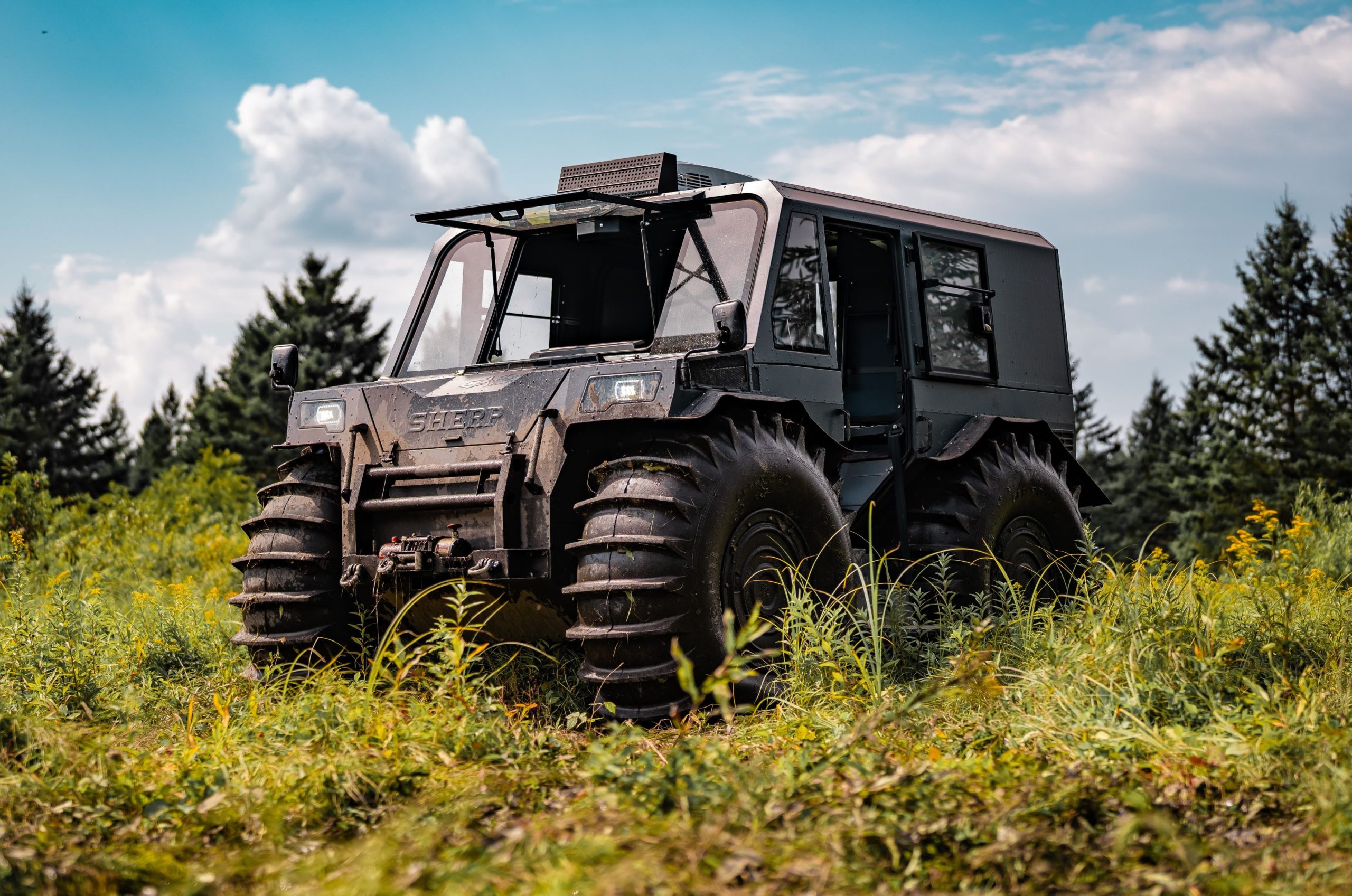


When people first learn about SHERP vehicles, the immediate question is usually simple: Is this worth the investment? It’s a fair question. A SHERP isn’t a typical ATV, and it isn’t priced like one. But it also isn’t designed for the same level of work. To know whether a SHERP is worth it, you have to look at the real-world situations these vehicles are built for: mud, deep snow, muskeg, unstable ice, flooded areas, and places where traditional equipment frequently fails or gets stuck.
The value of a SHERP has less to do with features and more to do with whether you need guaranteed access to remote or difficult terrain. It’s a tool for teams and operations that can’t afford downtime, vehicle recovery costs, or delays caused by terrain or weather. For many organizations, that capability alone pays for itself. But the level of value varies depending on how you plan to use it, so it makes sense to break the analysis down by industry.
What Makes a SHERP Different?
Before digging into the use cases, it’s helpful to understand why SHERP performance is so different from machines like ATVs, UTVs, snowmobiles, and off-road trucks.
SHERPs run on oversized low-pressure tires that carry the vehicle on top of mud, snow, and soft terrain instead of sinking into it. They float on water, transition between land and water without preparation, and keep moving even when the landscape shifts with the seasons. The drivetrain is simple, the body is extremely durable, and the engine is designed to be dependable instead of fast.
This combination leads to a vehicle that delivers consistent access, even when conditions change suddenly. And for many organizations, predictable access is the deciding factor in whether the SHERP is financially worth it.
Is a SHERP Worth It for Businesses?
Businesses in construction, mining, energy, forestry, land management, and remote logistics often deal with one major challenge: terrain and weather that slow work down or stop it entirely. Getting crews, equipment, or supplies to a site can be one of the biggest operational expenses. Not because of distance, but because of mud, snow, flooded roads, or inconsistent seasonal conditions.
This is where SHERP vehicles tend to show their value. They eliminate many of the access issues that cause delays or force companies to rely on seasonal roads or specialized transport. With a SHERP, crews can move people and equipment year-round without worrying about whether the ground is too soft, the snow is too deep, or the ice is too unreliable.
Businesses also see savings by reducing the need for multiple types of machines. A SHERP can often replace a combination of ATVs, snowmobiles, side-by-sides, swamp vehicles, and small boats. Instead of owning several specialized vehicles that each work well only in the right season, businesses can rely on one machine that works in all of them.
Maintenance costs are another consideration. SHERPs are designed to be rugged and straightforward to maintain. Fewer moving parts and a protected driveline reduce the amount of downtime and repair expenses, and the diesel engine fits easily into existing refueling setups for most industrial operations.
For businesses that operate in steady, predictable environments, a SHERP might feel like overkill. But for any operation that regularly deals with terrain or weather disruptions, the cost of a SHERP is often far less than the ongoing cost of delays, damaged equipment, and lost productivity.
Is a SHERP Worth It for Municipalities?
Municipalities and emergency response teams often find that the SHERP becomes one of the most useful multi-purpose vehicles in their fleet. Whether the need is rescue response, flood access, storm damage inspection, or seasonal infrastructure work, the SHERP gives teams a reliable way to reach areas that standard vehicles simply can’t handle.
For example, during flooding, many communities own high-water trucks, but those trucks still need stable ground and cannot move through deep mud or floating debris. The SHERP’s ability to travel through water, up steep slopes, over debris, and across unstable terrain gives crews access even when conditions are changing hour by hour.
Snowstorms or freezing weather cycles create another challenge. Ice becomes unstable, roads drift shut, and snow machines struggle when the snow becomes soft or uneven. Because SHERPs maintain traction in deep snow and can continue traveling even when ice breaks underneath them, they allow responders and public works teams to move safely in situations that usually require waiting for conditions to improve.
Municipalities also appreciate that SHERPs can be shared between departments. Emergency services may use them for rescues, while public works uses the same vehicle for year-round access to culverts, levees, utility equipment, and remote infrastructure. This multi-department usage significantly increases the vehicle’s return on investment.
When compared to large rescue trucks, tracked vehicles, or specialized amphibious units, the SHERP is often more affordable to operate long-term and far more versatile in day-to-day municipal work.
Is a SHERP Worth It for Remote Operations?
Remote operations, such as remote lodges, homesteads, research camps, exploration teams, and independent landowners, are often the groups that get the most immediate value from a SHERP. In many remote areas, there are no reliable roads, and the conditions can change quickly. A trail that is usable in winter may become a swamp in spring. A creek that is easy to cross in summer might flood unexpectedly. Snow depth can change overnight.
SHERPs are built for exactly these kinds of environments. The ability to move through muskeg, across deep snow, through lakes, and over broken or uneven terrain gives remote teams a consistent, year-round transportation option. It means fewer surprises and fewer situations where someone gets stuck miles from help.
Fuel is also a major consideration for remote living. Because SHERPs run on diesel and have low fuel consumption for their size, they fit into most remote fuel storage systems without requiring special arrangements. Their durability also means fewer breakdowns, an important factor when you’re far from repair shops.
In these environments, the SHERP is bought because it solves practical mobility problems that other machines cannot. If you need to haul supplies, transport equipment, move people safely, or simply get from point A to point B regardless of the season, the SHERP often ends up being the most reliable approach.
Comparing SHERP Costs to Alternatives
It’s true that the initial cost of a SHERP is higher than traditional off-road vehicles. But the comparison becomes more balanced when you consider what the SHERP can replace.
A typical remote or industrial operation might own:
- ATVs for summer
- Snowmobiles for winter
- UTVs for general transport
- A small boat for water access
- A tracked vehicle for mud or muskeg
- A rescue vehicle for emergencies
A SHERP can handle all of these conditions with one vehicle. On top of that, traditional equipment often needs expensive recovery services when it gets stuck. It also suffers more terrain-related damage and may require seasonal replacement.
When organizations compare the total cost of ownership, including purchasing multiple vehicles, maintenance, repairs, fuel, and recovery costs, the SHERP often ends up being more cost-effective than the combined alternative.
The Real Value: Reliable, Year-Round Access
No matter which industry you’re in, the key determining factor is simple: Do you need dependable access to areas where terrain or weather regularly create problems? If the answer is yes, then a SHERP is usually worth the investment.
The vehicle provides consistent mobility, reduces downtime, lowers risk, and eliminates many of the obstacles that traditionally slow down field operations. For many organizations, that predictable access leads to smoother workflow, less equipment damage, safer travel, and fewer delays.
When Is a SHERP Worth It?
A SHERP is worth it when the cost of losing access is higher than the cost of owning a reliable, all-terrain solution. For many businesses, municipal agencies, and remote operations, that threshold is met quickly.
If your work depends on reaching places that are difficult, unpredictable, or constantly changing, then a SHERP becomes a practical, dependable tool that will likely outperform anything else you could use in the same environment.


