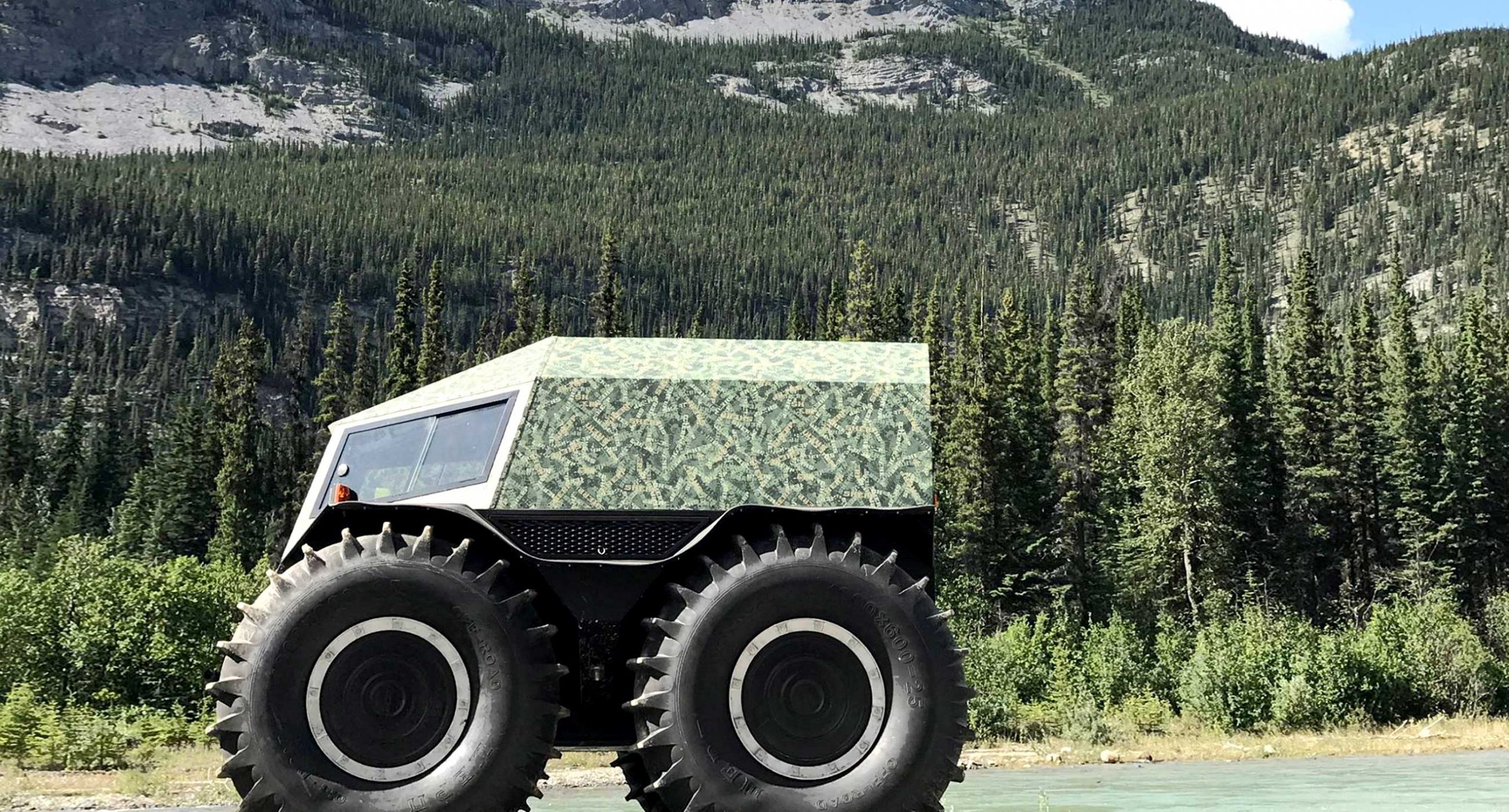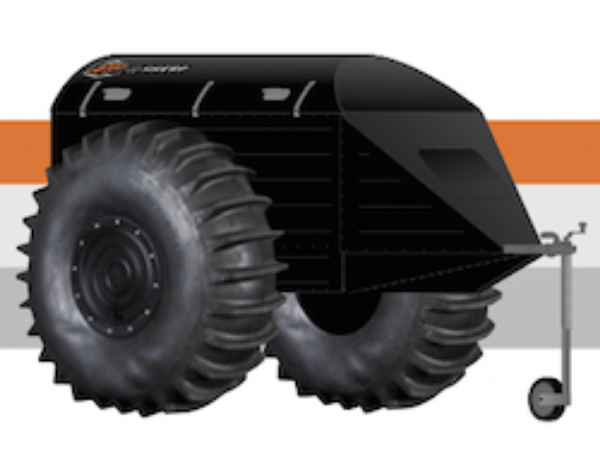


When businesses first look at a SHERP, the first reaction is usually about price. It’s not an impulse purchase. It’s not something you add to a fleet just to try it out. A SHERP is a serious piece of equipment, and the upfront cost reflects that. The better question isn’t “Why does it cost that much?” It’s “What does it replace, prevent, or improve over time?”
For companies working in remote, unstable, or unpredictable terrain, the value of a SHERP becomes clearer when you stop comparing it to an ATV or pickup and start comparing it to downtime, recovery costs, lost contracts, safety incidents, and multiple machines doing one job inefficiently. This is how businesses justify the investment over time.
Total Cost of Access
Most companies that consider a SHERP operate in environments where access is the biggest challenge. That includes oil and gas fields, mining operations, utility maintenance, environmental monitoring, remote construction sites, wildfire response zones, and northern or Arctic regions.
In these settings, access isn’t guaranteed. Roads wash out. Ice conditions change. Spring thaw turns solid ground into deep mud. Snow levels fluctuate. Flood zones expand. When access disappears, work stops.
Stopping work is expensive. Crews still get paid. Deadlines don’t move. Equipment sits idle. Contracts may include penalties. The cost of lost access can easily exceed the cost of a vehicle. Businesses justify a SHERP by asking one core question: how much does it cost us when we can’t reach the job site? If the answer is “a lot,” then a vehicle designed specifically to prevent that scenario starts to make financial sense.
Downtime Is More Expensive Than Equipment
Downtime is one of the biggest hidden costs in remote operations. When a truck or UTV gets stuck, it’s not just a recovery issue. It’s a chain reaction. You might need another vehicle to attempt recovery. That vehicle might get stuck too. You might need a tracked machine. That machine might not be able to reach the site either. Meanwhile, workers are waiting. Every hour adds up.
SHERP’s value often comes down to reliability in bad conditions. It’s designed to operate in terrain that stops other vehicles. That doesn’t mean it never faces challenges, but it significantly reduces the likelihood of getting buried in mud, snow, or muskeg. If a SHERP prevents just a handful of major recovery events over a few years, that alone can offset a significant portion of its cost.
Replacing Multiple Vehicles With One Machine
In many remote operations, companies rely on multiple vehicle types to cover different terrain. A truck for roads. A side-by-side for trails. A tracked unit for winter. A boat for water crossings. Each machine has a purpose, but switching between them takes time and coordination.
SHERP combines capabilities that would normally require multiple machines. It’s amphibious. It handles snow, mud, wetlands, and uneven ground without reconfiguration. It transitions from land to water without loading onto a trailer or switching platforms.
When companies calculate ownership costs, they don’t just compare SHERP to one vehicle. They compare it to several. Fewer machines mean fewer maintenance schedules, fewer insurance policies, fewer operators to train, and less logistical complexity. Over time, simplification saves money.
Reducing Recovery and Equipment Loss
Equipment loss in remote terrain is more common than most people realize. Vehicles sink in wetlands. They break through ice. They get buried during spring thaw. Recovering heavy equipment from unstable ground can require cranes, tracked machines, or specialized crews. Those recoveries aren’t cheap. They also carry safety risks.
Because SHERP is built around large, low-pressure tires and amphibious capability, it reduces the risk of sinking or becoming immobilized. It floats in water. It maintains low ground pressure in soft terrain. It doesn’t rely on speed or aggressive throttle to move forward.
When businesses look at long-term risk exposure, the reduced likelihood of catastrophic recovery events is part of the equation. Avoiding just one major equipment loss can justify a significant investment.
Improving Worker Safety
Safety incidents are expensive. That includes medical costs, insurance claims, downtime, investigations, and reputational damage. In remote environments, safety risks increase when crews are forced to improvise access.
Using vehicles not designed for the terrain often leads to risky decisions. Attempting to cross unstable ice. Pushing through deep mud. Towing equipment across flooded areas. SHERP is engineered specifically for unstable ground and water crossings. It provides a controlled, stable platform where other vehicles would struggle.
From a financial perspective, reducing safety incidents is a major factor. Insurance premiums, liability exposure, and compliance costs all tie back to operational risk. Businesses that operate in high-risk environments understand that investing in purpose-built equipment can reduce long-term exposure.
Extending the Work Season
In northern regions and seasonal climates, there are often “shoulder seasons” when access becomes unreliable. Spring thaw and fall freeze-up can shut down operations for weeks. These transitional periods can be financially painful. Equipment sits idle. Crews are reassigned or underutilized. Projects are delayed.
SHERP’s ability to operate in mud, slush, snow, and partially frozen terrain extends operational windows. Instead of waiting for conditions to stabilize, businesses can continue working. Even extending the work season by a few weeks per year can significantly impact revenue. Over multiple years, that additional productivity compounds.
Lower Ground Impact
Environmental regulations are tightening in many industries. Operating in wetlands, tundra, or protected land often comes with strict requirements around ground disturbance. Heavy vehicles with high ground pressure create ruts, damage vegetation, and disrupt soil. Repairing that damage costs money and can delay future permits.
SHERP’s low ground pressure reduces surface impact. That can help companies stay compliant and avoid remediation costs. It can also strengthen relationships with regulators and local communities. From a business standpoint, protecting access rights and maintaining compliance is part of long-term cost control.
Resale Value and Longevity
Another factor businesses consider is residual value. SHERP vehicles are not mass-market machines. They serve a specific need and maintain demand in industries where capability matters more than brand trends. Because of that niche demand, resale value can remain strong compared to conventional off-road vehicles that depreciate quickly.
Additionally, SHERP is built with durability in mind. Remote operations don’t allow for frequent breakdowns. The design emphasizes mechanical simplicity and rugged components. When businesses plan equipment lifecycles, they look at how long a machine can remain operational under heavy use. A vehicle that lasts longer reduces annualized ownership cost.
Financing and Costs
Large equipment purchases are rarely paid outright in cash. Many businesses finance capital equipment or structure it as part of broader project budgets. When viewed as a capital investment tied to revenue-generating operations, the cost becomes easier to justify. If a SHERP supports multi-year contracts, critical infrastructure maintenance, or high-value projects, it becomes part of the revenue model rather than an isolated expense.
Accountants and operations managers look at return on investment over years, not months. When the vehicle directly supports revenue continuity, the math becomes clearer.
Reputation and Reliability
In competitive industries, reliability matters. If a company consistently reaches remote sites when competitors can’t, that reliability becomes part of their reputation. Clients notice when projects stay on schedule despite challenging conditions. Municipalities notice when emergency access remains consistent. Energy companies notice when inspections continue through difficult seasons.
Over time, reliability leads to repeat contracts and stronger positioning in bids. While that’s harder to quantify, it’s part of the long-term value. Businesses don’t justify SHERP based on image. They justify it based on performance that clients can depend on.
When It Doesn’t Make Sense
It’s also important to be realistic. A SHERP doesn’t make sense for every operation. If your work stays on maintained roads and stable ground, there are more cost-effective options. SHERP’s value shows up when terrain unpredictability directly impacts revenue, safety, or compliance. Companies that don’t face those challenges won’t see the same return. This is why serious buyers evaluate their terrain, recovery history, downtime costs, and risk exposure before making a decision.
Looking at the Long-Term Value
Over time, businesses justify the cost of a SHERP by comparing it to what they would otherwise spend on:
- Repeated recovery operations
- Lost productivity due to access issues
- Equipment damage in unstable terrain
- Seasonal shutdowns
- Safety incidents and liability exposure
- Maintaining multiple specialized vehicles
When you spread the initial investment across years of use and factor in avoided costs, the numbers often make more sense than they do at first glance. The key is to think beyond horsepower, speed, or novelty. For companies operating where roads end and terrain changes daily, access is the real currency. Equipment that guarantees access becomes part of operational stability.
That’s how businesses justify the cost of a SHERP over time. Not by focusing on the price tag, but by looking at what consistent mobility is worth to their operation year after year.