


When people first look at off-road vehicles, horsepower is usually the first spec they ask about. It’s familiar. Bigger numbers feel better. More power sounds like more capability. But once you spend real time in mud, snow, muskeg, wetlands, or loose terrain, horsepower quickly becomes secondary. In extreme environments, traction and flotation matter far more than raw engine output. That’s where tire design becomes the deciding factor.
This is one of the main reasons vehicles like SHERP perform the way they do. SHERP doesn’t rely on speed or brute force. It relies on tire engineering that allows the vehicle to stay on top of terrain rather than fight against it. Understanding why tire design matters more than horsepower helps explain why SHERP works where other machines don’t.
Horsepower Has Limits in Soft and Unstable Terrain
Horsepower is useful when traction is consistent. On pavement, gravel roads, or firm trails, more power helps with acceleration, towing, and climbing. In extreme terrain, those conditions disappear quickly. Mud, snow, peat, ice, and water don’t provide a solid surface to push against. When traction drops, additional horsepower doesn’t create forward movement, it creates wheel spin.
Anyone who has buried a truck or ATV knows this firsthand. Pressing the throttle harder usually makes things worse. Tires dig in, ruts deepen, and the vehicle settles lower. At that point, the problem isn’t lack of power. It’s lack of flotation and grip.
This is where many traditional off-road vehicles hit their limit. They’re designed to push through terrain using speed and torque. Once the ground gives way, power alone can’t solve the problem.
The Real Job of Tires in Extreme Terrain
In extreme terrain, tires have a different job than they do on roads or trails. Instead of gripping a firm surface, they need to distribute weight evenly, minimize ground pressure, and maintain forward motion without digging. The goal is to float across terrain, not plow through it.
Tire design affects how much weight is applied per square inch of ground, how the tire deforms under load, and how it interacts with water, snow, or mud. These factors determine whether a vehicle keeps moving or becomes stuck.
SHERP’s entire design philosophy starts with this idea. Instead of building power and hoping the tires can keep up, SHERP builds the vehicle around oversized, low-pressure tires that handle the terrain first.
Low Ground Pressure
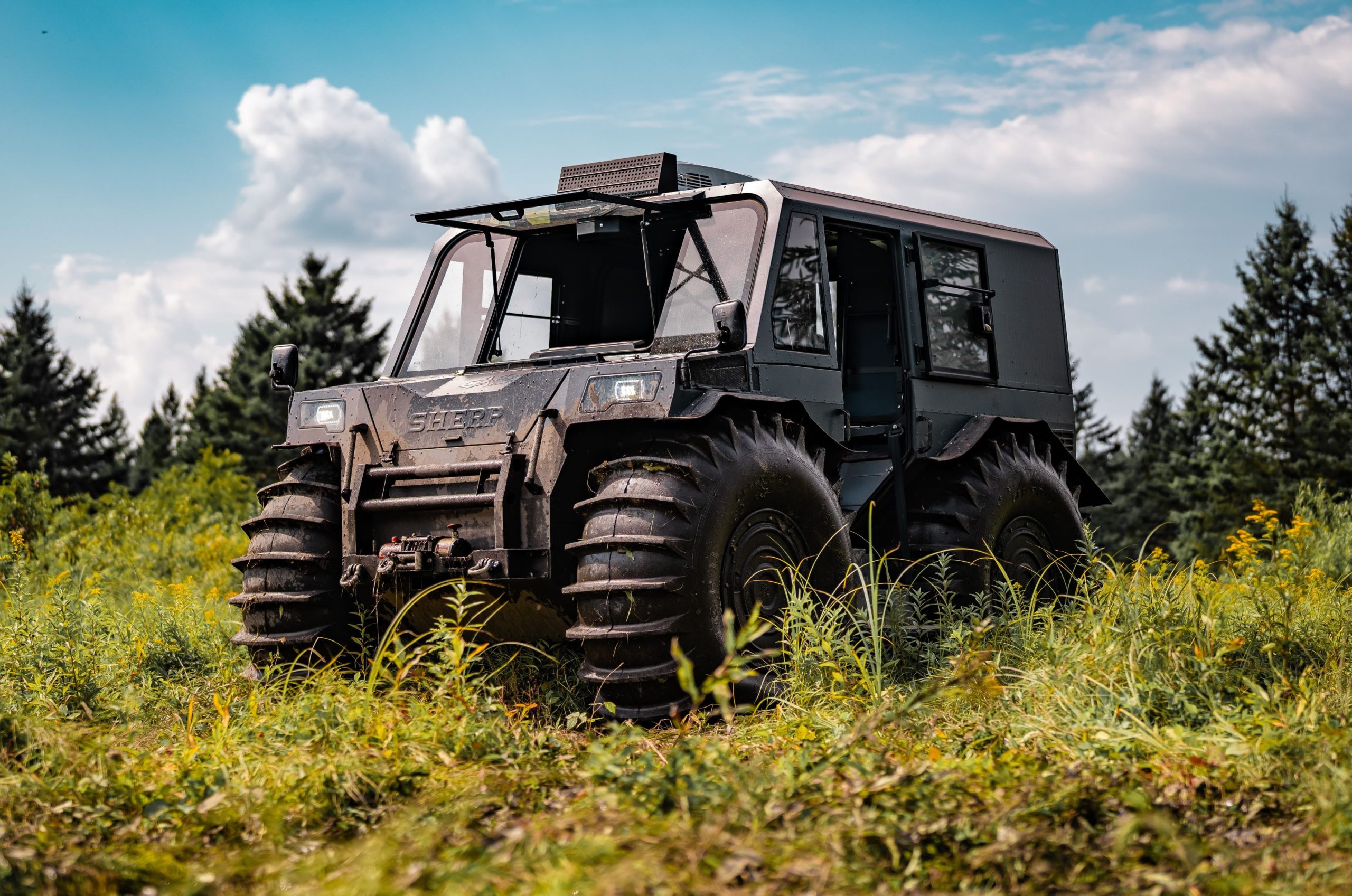
One of the biggest advantages SHERP has over traditional ATVs, UTVs, and even tracked vehicles is extremely low ground pressure. The tires are massive, around 70 inches tall, and operate at very low pressure. This spreads the vehicle’s weight across a large surface area.
Lower ground pressure means the vehicle doesn’t sink as easily. In snow, that means staying on top instead of breaking through. In mud or muskeg, it means floating rather than bogging down. In wetlands or tundra, it means crossing sensitive terrain with minimal impact.
This isn’t theoretical. Low ground pressure is the reason SHERP can drive across surfaces that would immediately trap wheeled or tracked vehicles, regardless of how much power those vehicles have.
Tire Size and Volume Matter
Many off-road vehicles rely on aggressive tread patterns to generate traction. While tread matters, it only helps if the tire is already supported by the terrain. In deep mud or snow, tread can only do so much if the tire sinks.
SHERP tires rely more on size and volume than aggressive lugs. The sheer volume of air inside each tire allows it to deform and adapt to uneven ground. The tire wraps around obstacles instead of bouncing off them. This creates consistent contact rather than intermittent grip.
That’s why SHERP doesn’t need to rely on wheel speed or momentum. It moves steadily, allowing the tires to do their job without tearing up terrain or burying the vehicle.
Central Tire Inflation
Another reason tire design matters so much is adjustability. SHERP uses a central tire inflation system that allows the operator to change tire pressure from inside the cab. This means the tires can be tuned for different terrain without stopping or getting out.
Lower pressure improves flotation in soft ground. Higher pressure helps when crossing firmer surfaces or transitioning between terrain types. Instead of overpowering the ground, SHERP adapts to it. More horsepower doesn’t give you that flexibility. Adjustable tires do.
Water, Snow, and Ice Require Flotation
In amphibious conditions, horsepower matters even less. When crossing water or slush, forward motion depends on displacement and traction, not torque. SHERP’s tires act like paddles, providing propulsion without needing additional power systems.
On ice, spinning tires only polish the surface. Low-pressure tires that spread weight evenly reduce pressure points and help maintain control. In snow, flotation prevents break-through, which is often what causes other vehicles to get stuck. This is why SHERP can transition from land to water and back again without changing configuration. The tires are doing the work, not the engine.
Why More Power Can Actually Be a Liability
In extreme terrain, too much power can work against you. Aggressive throttle inputs lead to wheel spin, which removes traction and digs holes. This is especially true in mud and snow.
SHERP’s modest engine output is intentional. Power delivery is controlled and predictable, allowing the tires to maintain grip. The vehicle moves at a pace that matches the terrain rather than fighting it. This approach reduces operator error and minimizes recovery situations. It also puts less stress on driveline components over time.
Tire Design Reduces the Need for Recovery
One of the biggest costs in remote operations isn’t fuel or maintenance, it’s downtime caused by stuck vehicles. Recovery equipment, additional personnel, and lost work hours add up quickly.
Vehicles that rely on horsepower often require winching, towing, or assistance when conditions deteriorate. SHERP’s tire design reduces the need for recovery by preventing vehicles from getting stuck in the first place. When a vehicle stays on top of terrain instead of sinking into it, recovery becomes the exception rather than the rule.
Environmental Impact Is Closely Tied to Tire Design
Low ground pressure isn’t just about performance. It also reduces environmental damage. Heavy vehicles with high ground pressure leave deep ruts, damage vegetation, and disrupt soil structure.
SHERP’s tires distribute weight evenly, allowing the vehicle to cross sensitive environments like tundra, wetlands, and protected land with less impact. This is a major reason SHERP is used in environmental research, conservation work, and regulated areas. More horsepower doesn’t solve environmental constraints. Tire design does.
Why SHERP Focuses on Tires First
SHERP wasn’t designed by adding bigger tires to an existing platform. It was designed around the tires from the start. Everything else supports what the tires are doing.
This is why SHERP can outperform vehicles with far more horsepower in real-world conditions. It’s not about winning a spec sheet comparison. It’s about staying mobile when conditions are unpredictable and unforgiving.
The Bottom Line
In extreme terrain, movement comes from traction, flotation, and control. Horsepower only helps if the tires can transfer that power to the ground. When they can’t, power becomes irrelevant. SHERP proves that tire design matters more than horsepower by focusing on what actually keeps a vehicle moving in mud, snow, water, and unstable ground. Big, low-pressure tires with adjustable inflation create capability that engine output alone can’t match.
If you’re operating in terrain where getting stuck isn’t an inconvenience but a serious problem, tire design isn’t just important, it’s the foundation of everything else.


