
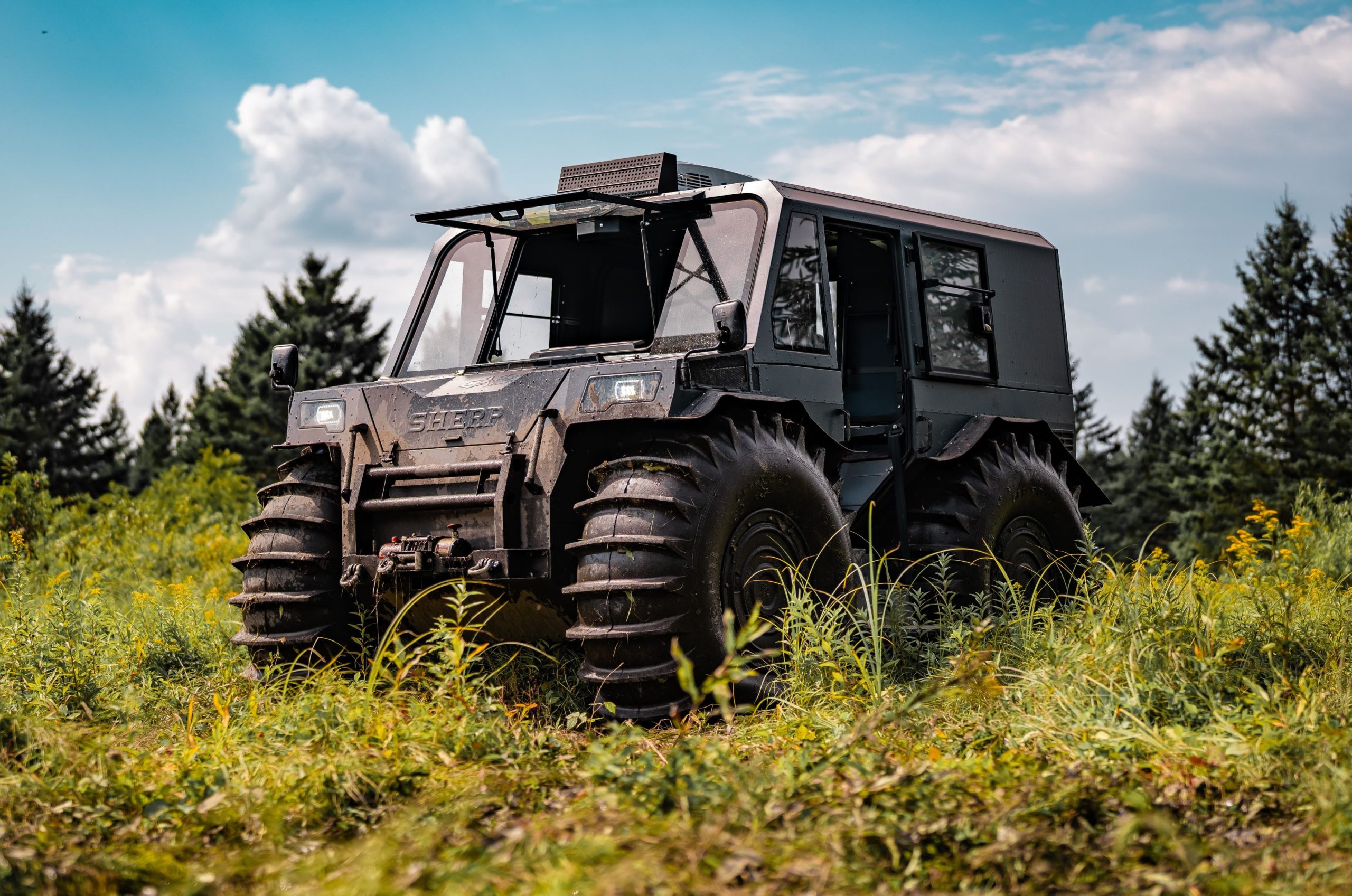


If you’ve ever seen a SHERP in action, the first reaction is usually some version of, “There’s no way that thing should be able to do that.” It rolls over terrain that stops trucks, crawls through mud that would swallow most ATVs, floats across water, and keeps going when conditions get worse instead of better. But beyond the viral clips and impressive visuals, the real question people ask is simple: how much can a SHERP actually do in the real world?
This isn’t about marketing claims or extreme demos meant for social media. It’s about what the vehicle is genuinely capable of handling day in and day out, and why so many industries are using SHERP machines for work that would otherwise require multiple pieces of equipment, or wouldn’t be possible at all.
Understanding What the SHERP Is Built For
At its core, the SHERP is designed to go where traditional vehicles can’t. It isn’t a modified truck or a lifted ATV. It’s a purpose-built amphibious off-road vehicle created for environments where terrain is unpredictable, unstable, or constantly changing.
The defining feature is the oversized, low-pressure tires. They act as both flotation devices and traction systems, allowing the vehicle to roll over mud, snow, rocks, marsh, and even open water. Combined with a low center of gravity and a compact footprint, this gives the SHERP a level of mobility that’s hard to replicate with anything else.
But raw capability doesn’t mean much unless it translates into real-world usefulness. That’s where the SHERP tends to surprise people.
How Much Terrain Can a SHERP Actually Handle?
In practical terms, a SHERP can travel across terrain that would stop most other off-road vehicles almost immediately. Deep mud, swampy ground, muskeg, snowdrifts, flooded trails, and uneven rock fields are all part of its normal operating environment.
Where a truck might sink or spin tires, the SHERP floats and crawls forward. Where an ATV might bottom out or lose traction, the SHERP’s wide footprint keeps it moving. The vehicle doesn’t rely on speed or momentum to get through obstacles. It relies on consistent traction and weight distribution.
That makes it especially useful in places where the ground changes constantly, wet one minute, frozen the next, soft underneath but firm on top. In these conditions, predictability matters more than speed, and that’s where the SHERP shines.
Water, Ice, and Transitional Terrain
One of the biggest advantages of a SHERP is its ability to move seamlessly between land and water. There’s no need to prepare, switch modes, or think twice about a flooded section of trail. It simply enters the water and keeps moving.
This ability changes what’s possible in remote areas. Lakes, rivers, swamps, and flood zones stop being barriers and become part of the route. In places where access depends on seasonal conditions, this alone can save hours or even days of work.
On ice and snow, the vehicle performs just as confidently. The large tires distribute weight evenly, reducing the risk of breaking through thin ice while maintaining traction on slippery surfaces. For operations in northern regions or unpredictable winter conditions, this reliability matters far more than raw speed.
Load Carrying and Practical Work Capability
A common question is whether a SHERP is just a transport vehicle or if it can actually do real work. The answer depends on how you define work.
The SHERP is extremely effective at carrying people, tools, equipment, and supplies into places where those things normally couldn’t reach. It can tow equipment, haul gear, and support field operations that would otherwise require multiple machines or helicopters.
In practical terms, that means fewer trips, less downtime, and less dependence on ideal conditions. For crews working in remote areas, that reliability often matters more than raw carrying capacity.
How It Handles Long Workdays
One thing people don’t always think about is how a vehicle performs over long stretches of time. The SHERP is built for sustained use rather than short bursts. Its diesel engine is efficient, dependable, and designed for extended operation in harsh environments.
The enclosed cabin helps reduce fatigue. Operators aren’t exposed directly to wind, rain, or cold, which makes a long day far more manageable. Controls are simple and intuitive, and once you get used to the way the vehicle responds, driving becomes almost second nature. This matters when the vehicle is used daily.
Where the SHERP Makes the Biggest Difference
The true value of the SHERP becomes clear in situations where traditional equipment reaches its limit. Remote construction sites, utility maintenance in wetlands, environmental monitoring, search and rescue, and seasonal access routes all benefit from its capabilities.
In many of these situations, the alternative would be expensive infrastructure work, air support, or simply waiting for better conditions. A SHERP changes that equation by making access possible when it otherwise wouldn’t be.
That flexibility is often what justifies the investment. Instead of planning around terrain, weather, or seasonal restrictions, teams can focus on the work itself.
How Much Is Too Much for a SHERP?
There are limits, of course. A SHERP isn’t designed for highway speeds or heavy towing on pavement. It’s not meant to replace standard vehicles where roads exist and conditions are predictable. Its strengths are most obvious in environments that challenge conventional machines.
Understanding those limits is part of using the vehicle effectively. When used in the right context, it performs exceptionally well. When used outside its intended purpose, it may not offer the same advantages.
That’s why most operators who get the most value from a SHERP are those who genuinely need off-road access rather than just want it.
What People Often Underestimate
One of the most overlooked aspects of the SHERP is how much it simplifies logistics. Being able to reach a site directly, carry equipment in one trip, and avoid getting stuck or delayed can save significant time and money.
It also reduces risk. Fewer recoveries, fewer breakdowns, and fewer situations where personnel are exposed to unsafe conditions. Over time, those benefits add up in ways that aren’t always obvious at first glance.
Many owners say the biggest advantage isn’t any single feature, but the consistency. Knowing that the vehicle will perform the same way regardless of terrain builds confidence and changes how projects are planned.
So, How Much Can a SHERP Really Do?
The honest answer is: more than most people expect, and in more conditions than most vehicles can handle. It’s about capability, reliability, and access. For those who work in environments where roads don’t exist or can’t be trusted, a SHERP is a solution to problems that don’t have many alternatives. And once you see what it can handle day after day, it becomes clear why so many industries rely on it to get the job done when nothing else will.


