
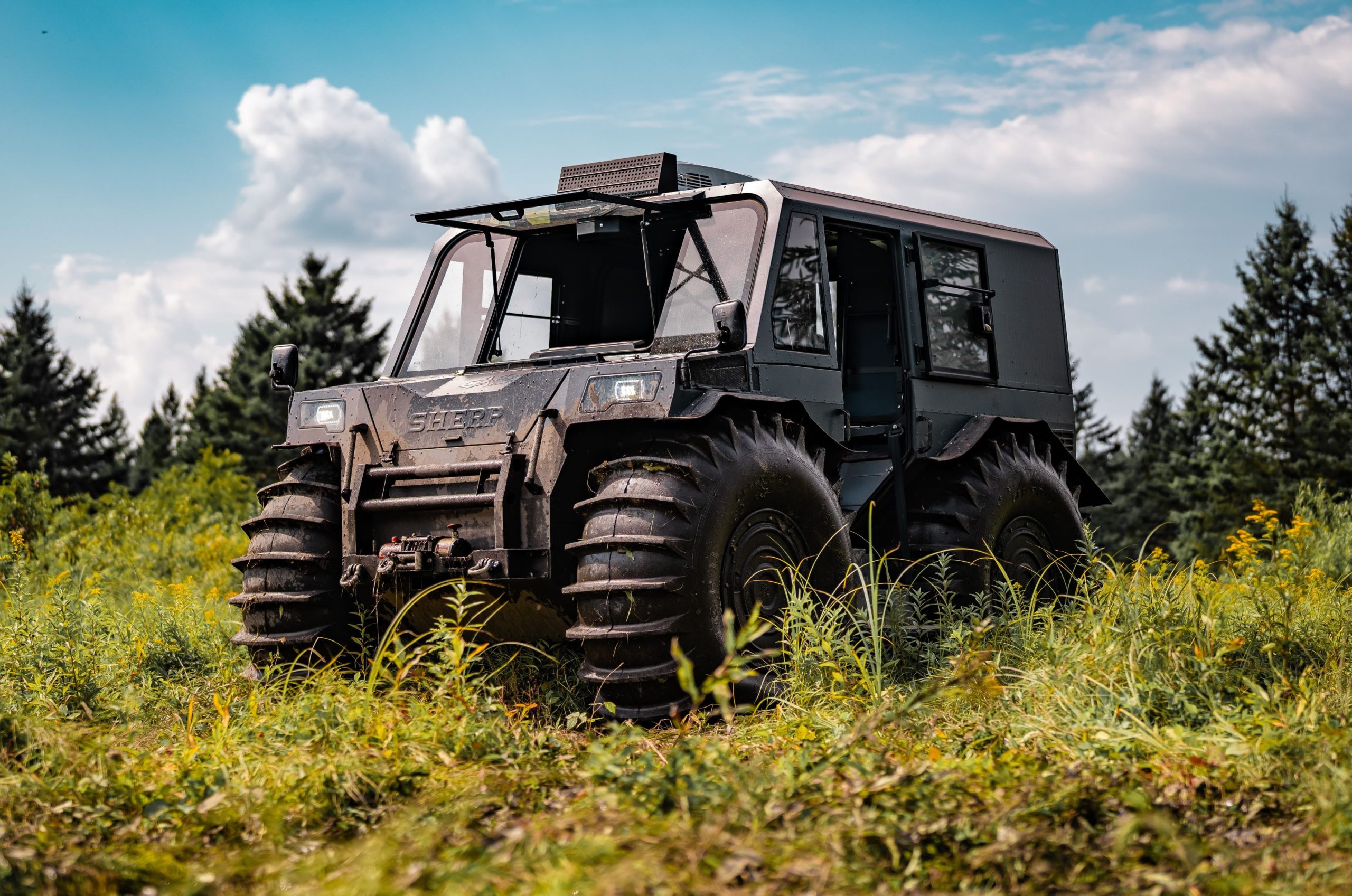


People who haven’t been around a SHERP usually assume it drives like a big ATV or some kind of specialty off-road toy. The reality is very different. Driving a SHERP feels less like operating a recreational vehicle and more like using a purpose-built tool designed to get through terrain most machines can’t handle.
The first thing you notice is how different the layout feels compared to typical off-road equipment. You sit high, with clear visibility in every direction. The controls are simple and practical, without extra screens or features that don’t serve a purpose. It feels like a machine that was designed to work first, not just look good on a spec sheet.
Once you start moving, it becomes clear that the SHERP isn’t meant to be fast. It’s built to stay steady and controlled no matter what’s under it. That difference changes how you approach driving almost immediately.
How It Moves Over Rough Ground
The biggest surprise for most people is how smoothly the SHERP moves over terrain that would normally cause a lot of bouncing or wheel spin. Instead of relying on suspension travel, the massive low-pressure tires do most of the work. Rocks, logs, ruts, and uneven ground feel more like gradual movements than large impacts.
You don’t need to constantly adjust the throttle or fight the steering wheel. The vehicle moves at its own steady pace, and once you get used to it, that consistency becomes one of its biggest strengths. You’re not reacting to every bump or correction, you’re simply guiding the machine where it needs to go.
This makes long days easier. You’re not worn out from fighting the terrain, and your focus stays on navigating rather than managing the vehicle itself.
Driving Through Mud, Water, and Soft Ground
One of the biggest differences between a SHERP and most off-road vehicles shows up the moment you hit soft ground. Mud, swamp, and saturated soil that would normally stop a truck or ATV don’t cause much hesitation.
Instead of digging down, the SHERP stays on top. The tires spread the weight out, allowing it to move forward without sinking. You can feel the vehicle working with the terrain rather than against it.
Water crossings feel almost uneventful. There’s no dramatic transition or change in handling. The vehicle simply floats and keeps moving. Steering remains consistent, and when you reach solid ground again, it climbs out without needing extra input.
That consistency is what stands out most. You don’t have to guess whether something is passable. You can see it, line up, and go.
How It Handles Snow and Cold Conditions
In snow and ice, the SHERP feels predictable in a way most vehicles don’t. Instead of spinning or sliding, it stays planted. Deep snow doesn’t slow it down much, and uneven or wind-packed areas don’t throw it off course.
The wide tires distribute weight evenly, which helps prevent sinking and keeps the vehicle stable. This makes winter travel less stressful, especially in areas where conditions can change quickly.
For operators who work year-round, this reliability matters more than speed. Knowing the vehicle will behave the same way in cold conditions as it does in warmer months removes a lot of uncertainty from planning and daily operations.
What It’s Like Inside the Cab
Inside the SHERP, everything is simple and functional. The seating position gives you a clear view in all directions, and controls are laid out logically. There’s nothing flashy, but nothing feels out of place either.
The enclosed cabin helps with noise and weather exposure, which makes long days more manageable. You’re not constantly dealing with wind, cold, or debris the way you would be on an open machine. That alone can make a big difference when you’re spending hours in tough conditions.
It’s not a luxury vehicle, but it’s comfortable enough that fatigue builds much more slowly than you’d expect.
What Stands Out After Spending Time Driving One
What most people notice after a few hours behind the wheel is how little effort it takes to keep moving. There’s no constant correction, no guessing whether you’ll make it through the next obstacle, and no need to overthink your approach.
The SHERP doesn’t feel like something you have to wrestle with. It feels predictable, steady, and dependable. That’s what makes it valuable in real-world use, especially in remote areas where mistakes can be costly.
People often expect the experience to feel intense or intimidating. Instead, it feels controlled and calm. That difference is what tends to leave the biggest impression.
Who Driving a SHERP Makes Sense For
Driving a SHERP makes the most sense for people who regularly work in environments where access is unreliable. This includes remote construction crews, utility and pipeline teams, search and rescue operations, land managers, and anyone responsible for moving people or equipment through difficult terrain.
It’s not about speed or comfort features. It’s about being able to go where you need to go, consistently, without worrying about whether the terrain will stop you.
For many operators, the first real drive changes how they think about access and mobility. Once you’ve experienced that level of capability, it’s hard to go back to equipment that constantly pushes its limits.
What Driving a SHERP Really Comes Down To
At the end of the day, driving a SHERP is less about excitement and more about reliability. It’s about knowing that mud, water, snow, or uneven ground won’t derail your plan. The experience is calm, controlled, and surprisingly straightforward.
For people who rely on reaching difficult places safely and consistently, that kind of confidence matters far more than speed or style. And once you’ve spent time behind the wheel, it becomes clear why so many industries rely on these machines to get work done where other vehicles can’t.


